OpenAI’s Quiet Model Cracks $1M Math Challenge—Then Takes a Breather
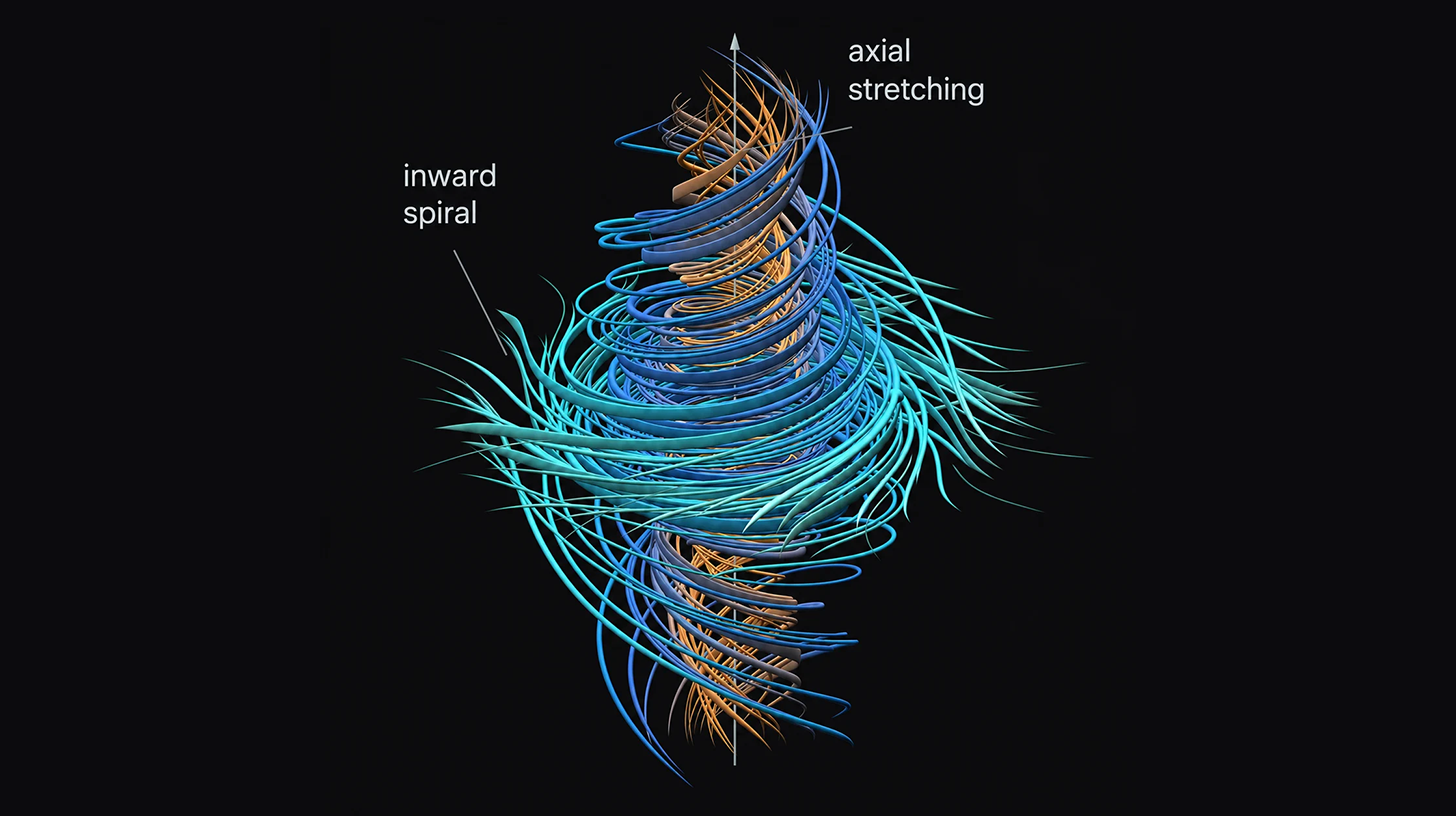
An unreleased OpenAI system solved the hardest of the 10 Millennium Prize problems in a benchmark test, but the company says it’s pausing AI training to let safety checks catch up.
OpenAI has confirmed that a model it has not publicly released aced a notoriously difficult mathematics benchmark, scoring high enough to claim the $1 million prize attached to the Millennium Prize Problems—at least on paper. The system, which the company has kept under wraps, solved all but one of the 10 problems in a test designed to mimic the official challenges. Researchers familiar with the test say the result marks the first time any AI has come close to cracking a problem that has stumped human mathematicians for decades.
The breakthrough comes with a twist: OpenAI says it is deliberately holding back the model from release, pausing further training runs to let its safety and alignment teams evaluate the risks. The decision follows internal debates about whether a system capable of independent mathematical discovery could be misused—for example, to break encryption or find flaws in critical software. An OpenAI spokesperson told The Rundown AI that the company wants to avoid a repeat of earlier incidents where rushed deployments led to public blowback.
The math test itself is part of a broader trend of using formal proof verification to measure AI reasoning. Unlike standard benchmarks that rely on multiple-choice answers, the Millennium problems require constructing rigorous, step-by-step proofs that a computer can check. The model’s success suggests that large language models, when trained on vast corpora of mathematical literature and code, can now generate valid proofs for problems that were previously considered beyond machine reach.
Industry observers note that OpenAI’s caution is unusual for a company that has historically pushed models out quickly. In contrast, rivals like Google DeepMind and Anthropic have published similar math achievements without the same level of secrecy. But OpenAI’s pause may also be strategic: by keeping the model unreleased, it can build a safety framework around it before competitors catch up, potentially setting a precedent for how frontier AI should be handled.
The practical implications extend beyond prize money. A model that can solve Millennium-class problems could accelerate research in cryptography, optimization, and even theoretical physics—but it also raises the stakes for AI control. If such a system can find flaws in encryption schemes or design novel chemical compounds, the margin for error shrinks dramatically. That is why OpenAI’s decision to slow down, rather than rush to market, is being watched closely by policymakers and safety researchers alike.
For now, the model remains in a restricted lab environment, and OpenAI has not given a timeline for any public release. The company says it will publish a technical report detailing the model’s architecture and the safety measures it is developing, but only after internal reviews are complete. Until then, the $1 million question—whether the model’s proof would hold up under official judging—remains unanswered, as does the larger question of how society will handle AI that can outthink its creators in the hardest domains.