New AI Model Cracks the Molecular Code Cells Use to Talk to Each Other
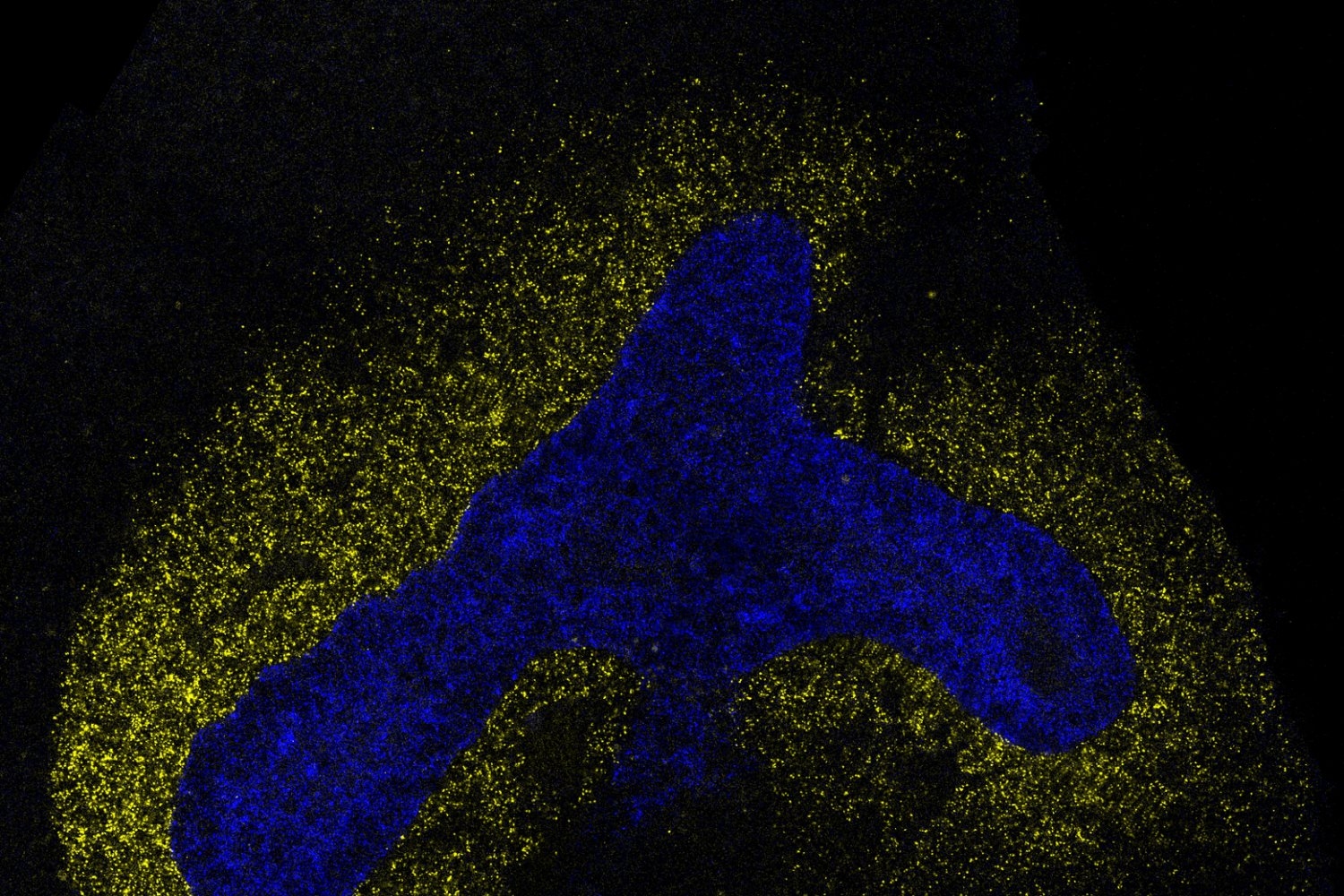
MIT researchers have built a computational system that predicts how cells signal one another to form tissues, a step that could speed up stem cell engineering and disease modeling.
Researchers at MIT have developed a computational approach that decodes the signaling language cells use to coordinate with one another, a problem that has resisted systematic analysis because the relevant cues are distributed across thousands of genes and proteins. The work, reported by MIT News, aims to predict how individual cells assemble into organized tissues rather than treating each cell in isolation. That shift matters because most existing models of cell behavior are built from bulk measurements, which average away the very interactions that determine whether a tissue forms correctly or fails.
The system learns patterns from single-cell data and uses them to infer which signaling pathways are driving a given cellular decision, such as whether to divide, migrate, or differentiate. In practice, that means a researcher can take a snapshot of cells in a developing tissue and get a ranked list of the molecular conversations likely responsible for the structure observed. The team frames the method as a way to move from describing cell states to predicting cell behavior under new conditions, a distinction that has been hard to achieve with conventional statistical tools.
The immediate applications cluster around stem cell engineering, where scientists try to coax pluripotent cells into specific lineages for research or therapy. Getting those protocols right currently depends on trial-and-error adjustments to growth factors and timing, a process that can take months and often produces mixed populations. If a model can flag which signals are missing or misordered, it could shorten that loop considerably and make the resulting cell products more consistent, a long-standing bottleneck for both academic labs and biotech companies working on regenerative medicine.
Disease modeling stands to benefit in a different way. Many conditions, from fibrosis to certain cancers, involve cells misreading or ignoring signals from their neighbors, and the new approach offers a way to test hypotheses about those failures in silico before committing to wet-lab experiments. The researchers position the tool as a complement to organoid and animal models rather than a replacement, since predictions still require validation at the bench. But even as a filter, it could help prioritize which signaling pathways are worth perturbing in expensive experiments.
The work fits a broader push to apply machine learning to cell biology, joining efforts that range from protein structure prediction to virtual cell simulations. What distinguishes this approach is its focus on communication between cells rather than the internal state of any single one, which is where much of the field's attention has concentrated. Whether that framing generalizes across tissue types and species is the open question the team has not yet answered at scale.
The next step will be independent replication on tissues beyond those used in the initial study, and evidence that predictions hold when researchers actually block or boost the flagged signals. If that validation comes through, the method could become a standard part of the toolkit for labs engineering stem cells or building disease models. For now, the contribution is a framework and a set of results, not a finished product, and the field will judge it on how well it performs outside the original dataset.