OpenAI Math Credibility Questioned in Viral Mastodon Post
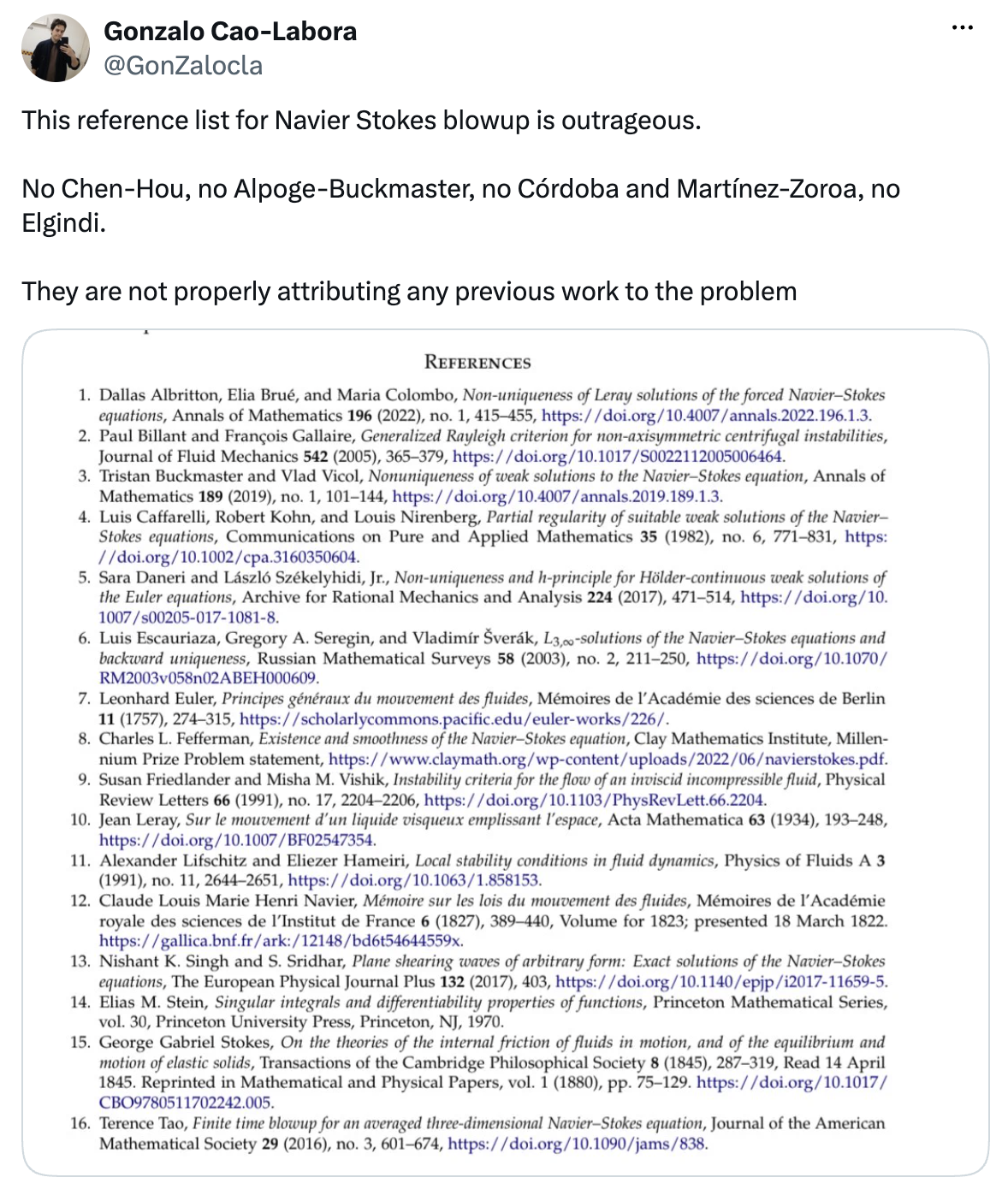
An unsourced Mastodon claim that OpenAI employs no mathematicians able to follow its published research is circulating without evidence, as scrutiny of AI labs' mathematical rigor intensifies.
A short Mastodon post asserting that OpenAI has nobody on staff qualified to understand the mathematics in its own publications has been submitted to Hacker News, where it has drawn a small amount of attention but no replies. The claim, posted under the handle tristanbuckmaster, arrives with no citations, no named sources and no example of a paper that was supposedly misread by its authors. The Hacker News thread attached to the submission currently shows zero comments, meaning the assertion has not yet been subjected to the technical scrutiny such a charge would normally invite.
The accusation lands at a moment when the mathematical claims coming out of large AI labs are under closer examination than at any point in the field's short history. OpenAI's published output in recent years leans on results from optimization, probability theory and functional analysis, spanning work on scaling laws, reinforcement learning from human feedback and the theoretical underpinnings of large language models. Whether the researchers who write those papers command the mathematics involved is a distinct question from whether the results themselves hold up, though the two issues are frequently blurred together in public argument.
OpenAI does not release a breakdown of its research staff by academic discipline, which leaves outside observers guessing at the composition of its technical teams. What is on the public record is that a number of senior researchers hold doctorates in mathematics, physics or theoretical computer science, and the company has recruited from university departments specializing in exactly the areas its papers draw on. That record makes a sweeping claim that no employee can follow the company's own output hard to sustain without concrete examples of work that was misunderstood.
A narrower version of the critique has more grounding. AI labs routinely publish faster than the surrounding mathematical community can check their results, and papers on interpretability, emergent behavior and training dynamics have at times borrowed terms like "phase transition" or "emergent ability" loosely. Physicists and mathematicians have pushed back, arguing that such language smuggles in assumptions that do not survive scrutiny in the original fields. That is an argument about rigor and peer review, not about the competence of individual researchers, and it applies across the industry rather than to any single lab.
For now, the episode says more about how quickly an unsupported charge can travel than about OpenAI's hiring. The item has not been stress-tested by the audience that usually dismantles such assertions, and the poster has offered nothing to verify. If a discussion does develop, the question worth asking is whether critics can name a specific paper and a specific error, rather than restating a general suspicion about the distance between what labs publish and what their authors can defend.