MIT Taps Two Sigma Co-Founder David Siegel as Innovation Fellow
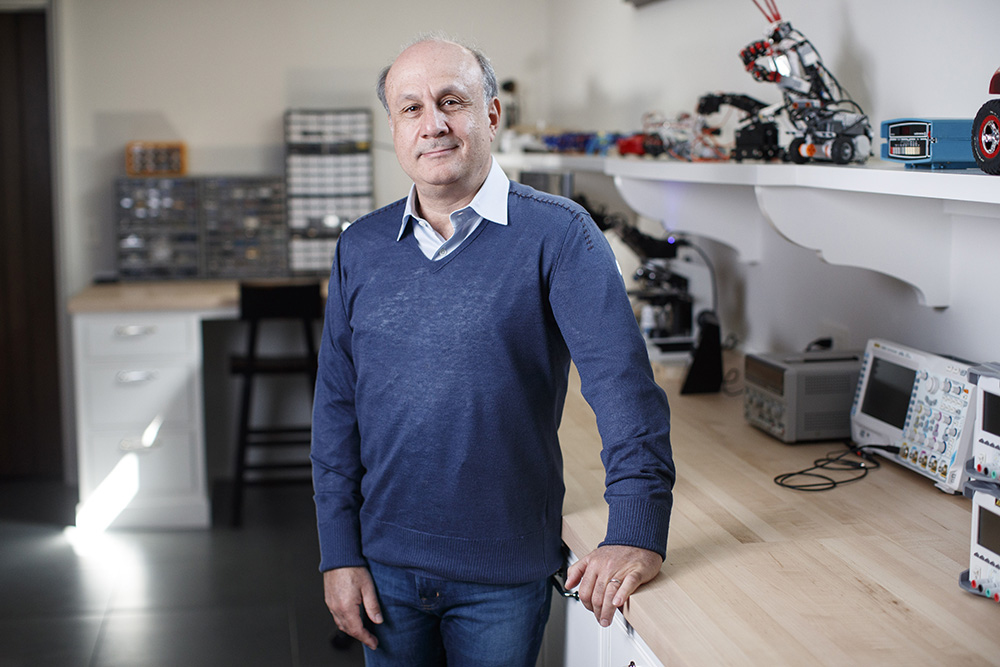
The computer scientist and philanthropist will work with the MIT Schwarzman College of Computing on AI-driven scientific discovery.
MIT has named David Siegel, a computer scientist, entrepreneur and philanthropist, as its next Innovation Fellow, the institute announced. Siegel, who earned both a master's degree in 1986 and a doctorate in 1991 from MIT, will work alongside the MIT Schwarzman College of Computing on efforts to apply artificial intelligence to scientific research. The appointment puts an alumnus with deep industry ties inside one of the university's newest and most heavily funded academic units.
Siegel is best known as a co-founder of Two Sigma, the New York quantitative investment firm he helped launch in 2001. Before that he spent years in technology roles, including a stint as chief technology officer at the online brokerage Datek Online, and he holds a PhD in computer science from MIT. His career has moved between building large-scale computational systems and funding basic research, a combination that fits the Innovation Fellow role's stated aim of connecting academic work with outside practice.
The fellowship places Siegel with the Schwarzman College of Computing, which MIT established in 2019 as a hub for computing research that crosses departmental lines. The college has since become the center of the institute's AI hiring and curriculum push, including the creation of shared faculty positions between computing and disciplines such as biology, chemistry and materials science. Siegel's mandate, according to MIT, centers on advancing AI and scientific discovery, a phrase that signals work on machine learning methods aimed at accelerating lab research rather than purely commercial applications.
Philanthropy is a significant part of why Siegel is a known figure in higher education. He and his wife, Susan, have given to MIT and other institutions, and Siegel has served on advisory boards connected to science and technology policy. That record gives the fellowship a fundraising dimension as well as a research one, at a moment when universities are competing for both AI talent and the private dollars that support it. MIT has not disclosed the length of the appointment or whether Siegel will hold a teaching or lab affiliation.
The announcement lands as elite research universities race to formalize relationships with AI industry figures, often through part-time or advisory arrangements that avoid the conflicts of a full faculty post. MIT's Innovation Fellow title has previously gone to practitioners brought in for defined periods, and the model lets the institute draw on outside expertise without committing to a permanent hire. What Siegel actually produces in the role, and how his industry background shapes the research agenda he touches, will be the measure of whether the arrangement delivers more than a headline.
Watch for details on which labs or projects Siegel will join and whether the college pairs him with specific faculty. MIT has yet to say if the fellowship comes with funding commitments or a public research output, leaving open how much of the work will be visible outside Cambridge.