FLAWED Benchmark Draws Fresh Scrutiny Over How Industry Research Validates Itself
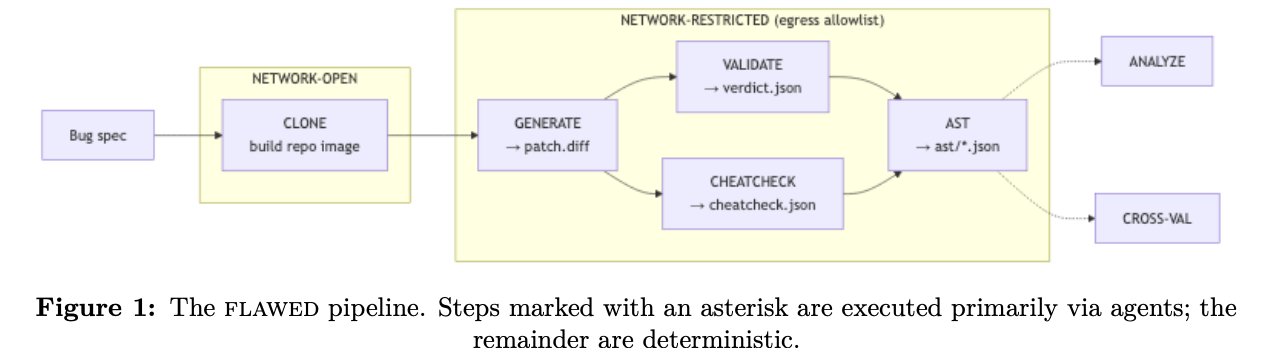
A fresh critique argues that weaknesses in the FLAWED evaluation method reveal more about self-policing inside industry AI labs than about the benchmark itself.
A new critique of the FLAWED benchmark argues that the evaluation method's shortcomings point to a bigger problem: the labs that build and rank AI models are largely the same ones that design the tests measuring them. The piece, published on suhacker.ai, contends that the benchmark's flaws matter less than the structural gap in how industry research gets validated. It arrives as benchmark credibility keeps flaring up as a fault line across the field.
FLAWED is designed to catch large language models that lean on shortcuts instead of real reasoning. The method pairs a standard task with a modified version in which the obvious heuristic produces the wrong answer; a model that does well on the original but falls apart on the variant gets flagged as having exploited a flaw in the test. The critique argues this framing can misread failure, because a drop on the variant might stem from distribution shift or sensitivity to prompt wording rather than a hidden shortcut.
That distinction carries weight because benchmark deltas now appear routinely in model cards, launch posts and safety documentation. If a score can be inflated by a lucky heuristic or deflated by a harmless formatting change, the number means less than the surrounding marketing implies. FLAWED's defenders counter that the benchmark was never meant as a final verdict, only a diagnostic — but diagnostics still need calibration.
The deeper issue is who runs the tests. Most prominent benchmarks are built, funded and interpreted by the organizations whose models they rank, and independent replication is scarce because evaluation harnesses are often released without the compute budget needed to rerun them. Researchers have repeatedly pushed for held-out test sets, third-party auditing and standardized reporting of variance across seeds and prompts.
What to watch next is whether the critique yields anything concrete: a revised scoring protocol, an independent replication of FLAWED's headline results, or a response from the benchmark's maintainers. Until one of those appears, the episode stands as a reminder that evaluation claims deserve the same scrutiny as the models they judge. The open question is who, if anyone, is positioned to apply that scrutiny at scale.