AI Labs Urged to Fund Historical Research as LLMs Crack 17th-Century Alchemical Letters
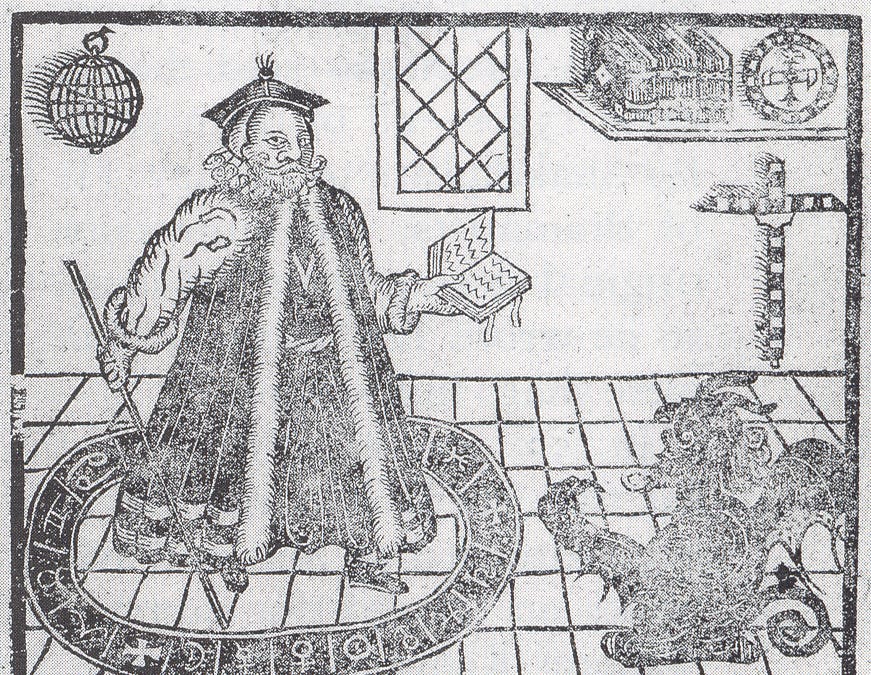
A Substack essay argues that AI companies should bankroll historians, pointing to large language models that are already transcribing and decoding early modern alchemical manuscripts.
A growing case is being made that AI laboratories should direct part of their budgets toward historical scholarship, and the evidence comes from work already underway: large language models are being used to transcribe and interpret 17th-century alchemical correspondence and other early modern manuscripts. The argument surfaced in a Substack essay titled "AI labs need to start funding historical research," which drew 67 points on Hacker News and a small but engaged comment thread. The pitch is straightforward — the same models that companies build for commercial tasks can read handwriting and archaic vocabulary that has stumped scholars for decades.
The technical hook is transcription. Early modern alchemical letters mix Latin, vernacular English, chemical symbols, abbreviations and personal ciphers, and many survive only as damaged or hastily written manuscripts. Handwritten text recognition has improved sharply, and LLMs fine-tuned on diplomatic and antiquarian corpora can now propose readings, flag uncertain characters and cross-reference parallel passages. That turns a task that once consumed years of a single scholar's career into something closer to a collaborative annotation pipeline.
Alchemy is a useful test case because its texts are deliberately obscure. Practitioners wrote in code to protect trade secrets and to dodge accusations of heresy or fraud, so a single recipe might use Decknamen — cover names — for ordinary substances. Decoding those layers requires both linguistic knowledge and domain context, which is exactly where a language model with a large context window can help. Historians have already used computational methods on alchemical corpora, but the new generation of models can work across languages and handwriting styles without a bespoke transcription system for every archive.
The funding argument rests on asymmetry. AI companies spend heavily on data acquisition, annotation and evaluation, yet the historical record — millions of pages in archives and rare-book rooms — remains largely undigitized and unannotated. The essay's author contends that a fraction of an AI lab's research budget would pay for digitization, transcription and scholarly review, producing open datasets that both historians and model developers could use. Hacker News commenters pushed back on parts of the idea, questioning who sets research priorities and whether corporate money would distort the field, but the underlying point about scarce digitization funding drew little dispute.
What changes for the field is not just speed. If labs fund this work, the output is a corpus that can be audited, cited and reused, rather than a one-off demo. That matters for historians who need provenance and for AI researchers who need hard evaluation tasks in low-resource domains. It also raises a practical question about credit and labor: the scholars who verify transcriptions are doing essential work, and the funding model would need to pay them rather than treat their corrections as free training data.
The immediate signal is modest — one essay and a Hacker News thread — but the direction is worth watching. If even one major lab attaches a named grant program to manuscript digitization, the effect on early modern studies could be measurable within a few years. The open question is whether AI companies see historical archives as infrastructure worth funding or merely as another source of training text to be scraped and forgotten.