A Data Scientist Measured How Many Labeled Examples a Text Classifier Actually Needs
A new Towards Data Science post benchmarks a classic text classifier against labeled-data budgets, offering a baseline check before teams default to LLM APIs.
A practitioner writing for Towards Data Science has published a hands-on measurement of a question most teams skip: how many labeled examples a conventional text classifier needs before it performs acceptably. The post, titled "How Many Labeled Examples Does a Text Classifier Actually Need? I Measured It.," argues that the answer should come before any decision to route every classification job through a large language model API. The core claim is simple: a decades-old baseline plus whatever labels you already have may be enough, and the post sets out to quantify exactly how much more data buys you.
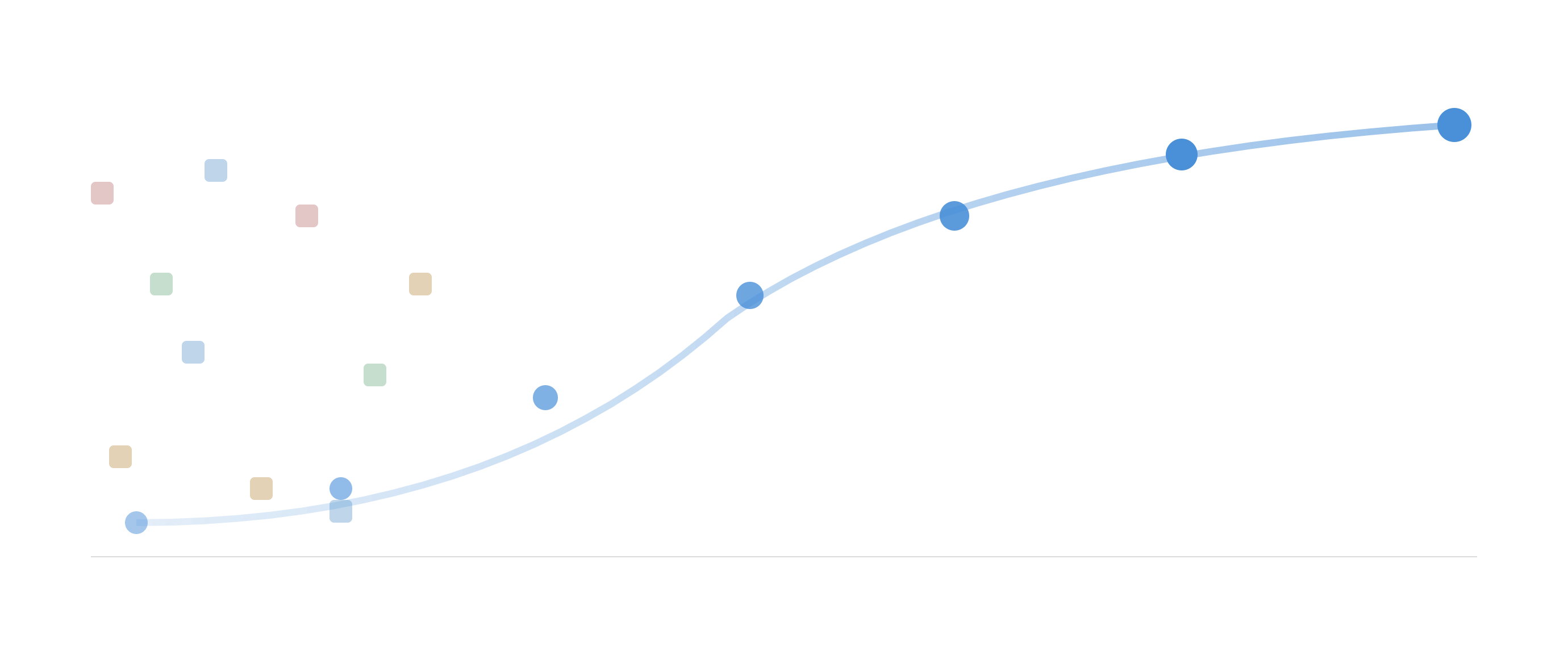
The framing matters because defaulting to an LLM API for text classification has become common practice, often without a cost or latency comparison against older methods. Classical approaches such as logistic regression or support vector machines over bag-of-words or TF-IDF features remain cheap to train, fast to serve, and fully local, but their accuracy is bounded by label quantity and quality. The post's contribution is not a new algorithm but a curve: performance plotted against the number of labeled examples, so readers can see where returns flatten.
That kind of measurement is useful precisely because it is unglamorous. Teams frequently assume more data will keep helping at a steady rate, when in practice accuracy gains tend to taper once a classifier has seen enough examples to separate the classes. Knowing the shape of that curve lets a team decide whether to label another few hundred examples, switch to a pretrained model, or accept the current baseline and move on. The post positions the exercise as a budgeting question rather than a modeling one.
There is also a cost dimension the measurement implicitly raises. LLM APIs bill per token, add network latency, and can change behavior when a provider updates a model, while a trained classifier is a fixed artifact that can be versioned and audited. For high-volume, narrow-label tasks, the older approach can be both cheaper and more predictable. The post's advice is not to abandon LLMs, but to check the baseline first and let the measured curve, not habit, drive the architecture choice.
What to watch next is whether such per-task data-efficiency benchmarks become standard practice in internal evaluation suites. The open question the post leaves is how these curves shift with modern pretrained encoders, which often need far fewer labels than the classic pipelines tested here. Until that comparison is run on a given dataset, the honest answer to how many examples you need remains: measure it yourself.