Zuckerberg Skips the AI Slowdown Talk, Keeps Building as Rivals Pull Back
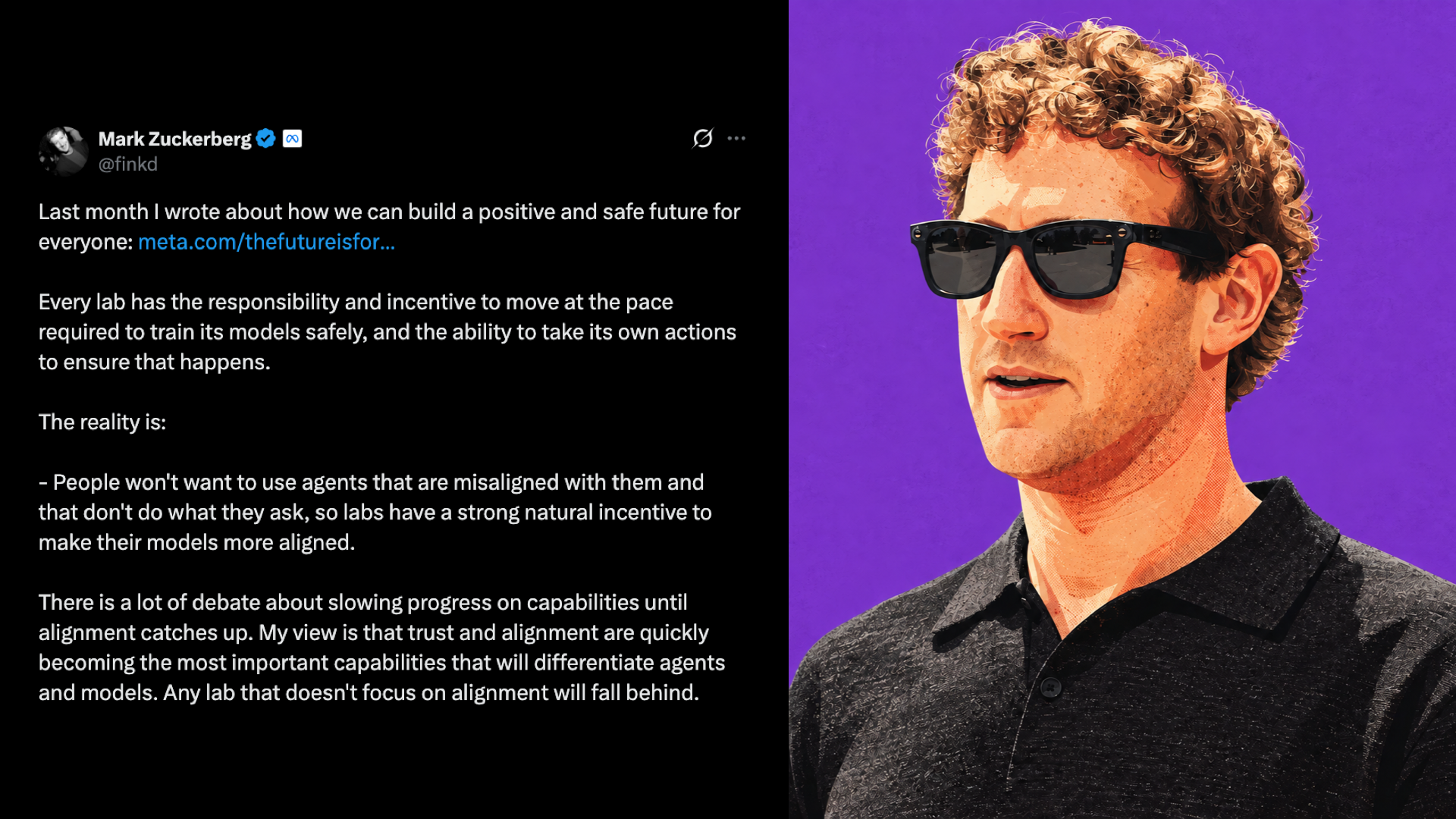
Meta is holding its AI spending and product cadence steady even as other labs trim ambitions, a contrast that now defines its competitive bet.
Mark Zuckerberg is staying out of the retrenchment conversation now spreading across the AI industry. While several rivals have trimmed roadmaps, delayed launches or reframed expectations for near-term model breakthroughs, Meta has kept its AI buildout and release schedule moving. The choice puts the company on the opposite side of a mood shift that has already reshaped hiring and capex plans at other labs.
The slowdown chatter is not uniform. Some labs are quietly pushing back timelines for frontier models, citing compute limits, evaluation bottlenecks and the reality that scaling returns are getting harder to predict. Others are redirecting budget from moonshot research toward products that can be sold now. Meta's posture, by contrast, has been to keep shipping consumer-facing AI features and to treat model development as an ongoing infrastructure project rather than a quarterly bet.
That divergence matters because Meta's scale lets it absorb costs that would break smaller players. Its AI work feeds directly into apps used by billions of people, which gives it a distribution channel most labs have to rent. If the slowdown thesis is right, Meta burns money longer than peers can. If it is wrong, it owns the next cycle while competitors spend the downturn explaining why they stopped.
The company has also kept a public education push going alongside the product work, including beginner-oriented material aimed at getting ordinary users comfortable with AI assistants in workplace settings. That is a different kind of investment than model training, but it serves the same strategy: normalize the tools, then let usage justify the spend. Rivals cutting back rarely keep funding that kind of onboarding content.
What is not yet clear is whether Zuckerberg's refusal to join the slowdown is conviction or inertia. Meta has not published a fresh benchmark showing its latest models closing the gap with the top labs, and the company's history includes expensive pivots that were later written down. The next few quarters of product releases, and any change in capital spending guidance, will show whether Meta is genuinely ahead of the cycle or simply the last one still buying in.