Top AI Labs Call for Pause on Advanced Model Development
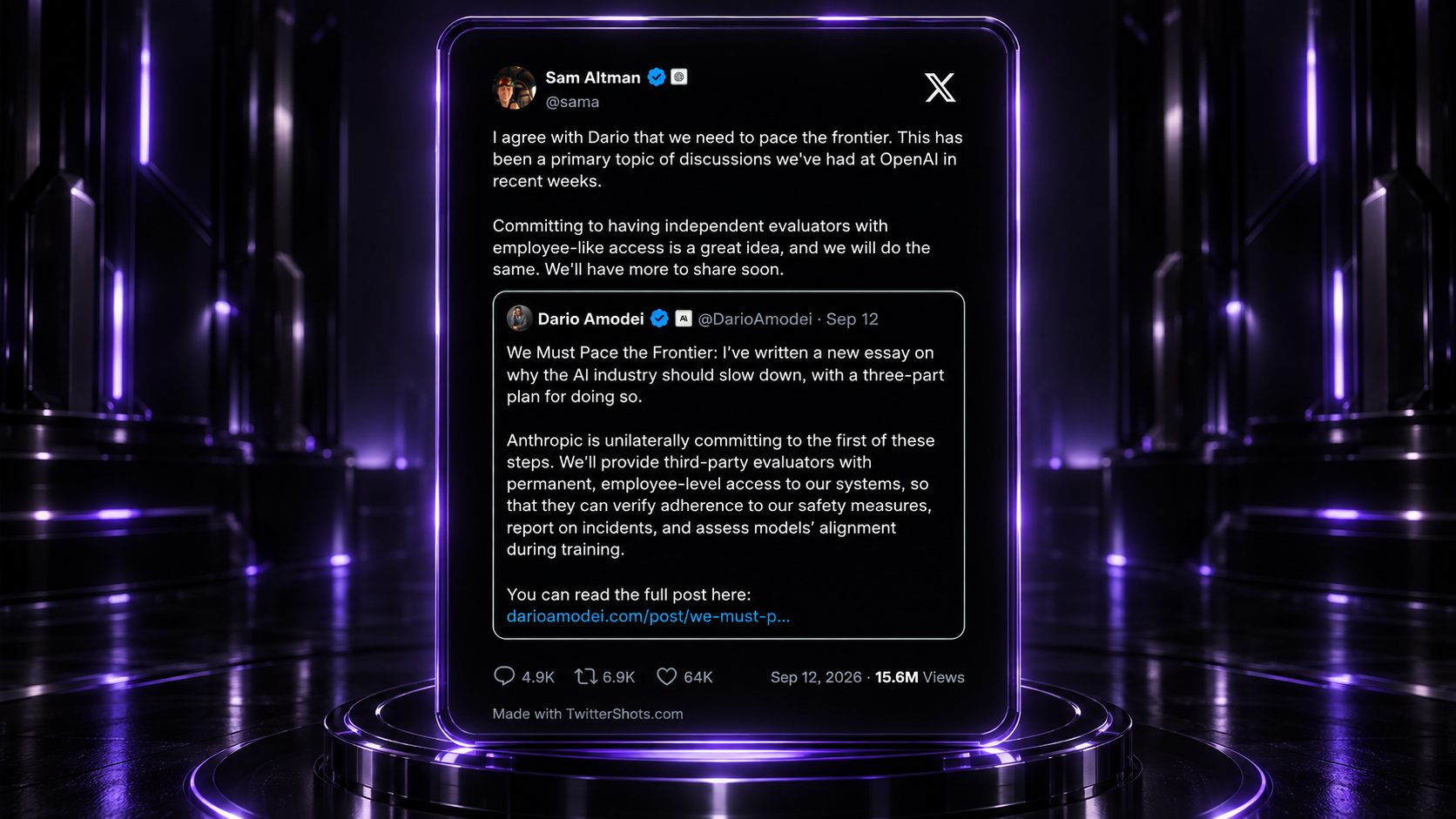
Leading AI companies, including OpenAI, Google DeepMind, and Anthropic, are urging a slowdown in the race to build ever-more-powerful AI systems.
In an unusual display of consensus, several of the world's most prominent artificial intelligence laboratories have signed a joint statement calling for a temporary halt to the development of AI systems more capable than those currently in existence. The group, which includes OpenAI, Google DeepMind, and Anthropic, argues that without robust safety guarantees, rushing ahead could pose unacceptable risks to society. The announcement, made on Tuesday, marks the first time these competitors have publicly aligned on the need for caution.
The statement does not specify an exact capability threshold, but it references models that could autonomously replicate, deceive humans, or launch cyberattacks. It also urges governments to collaborate on international safety standards and to fund research into alignment and interpretability. Notably, the labs stopped short of committing to a unilateral moratorium, leaving the door open for continued development under certain conditions.
Industry watchers see the move as a strategic shift. "This is as much about shaping regulation as it is about safety," said Sarah Myers West, managing director of the AI Now Institute. "By calling for a pause, these labs position themselves as responsible actors while setting the terms for any future oversight." The statement comes amid growing scrutiny from lawmakers in the US and EU, where draft rules on foundation models are advancing.
Critics, however, point out that the same companies are racing to deploy increasingly powerful systems. Just last month, Google unveiled Gemini Ultra, and OpenAI teased GPT-5. "A voluntary pause without enforcement is little more than a PR move," said Emily Bender, a linguistics professor at the University of Washington. "If they were serious, they would stop training runs now." The labs have not disclosed whether they will delay upcoming model releases.
The joint statement also emphasizes the need for third-party audits and red-teaming before any advanced model is released. It calls for a global registry of high-risk AI systems and suggests that developers should share safety findings with regulators. These proposals echo recommendations from the recent UK AI Safety Summit, though they go further by explicitly targeting models beyond current capabilities.
What happens next depends on whether the labs translate words into action. The statement includes no timeline or verification mechanism, and it remains unclear if any company will actually slow its research. Meanwhile, policymakers are watching closely; the European Union's AI Act is set for a final vote later this year, and US senators are drafting bipartisan legislation. If the labs' call leads to concrete rules, it could reshape the competitive dynamics of the entire field.