Skild AI's S1 Robot Model Learns New Tasks From One Video Demo
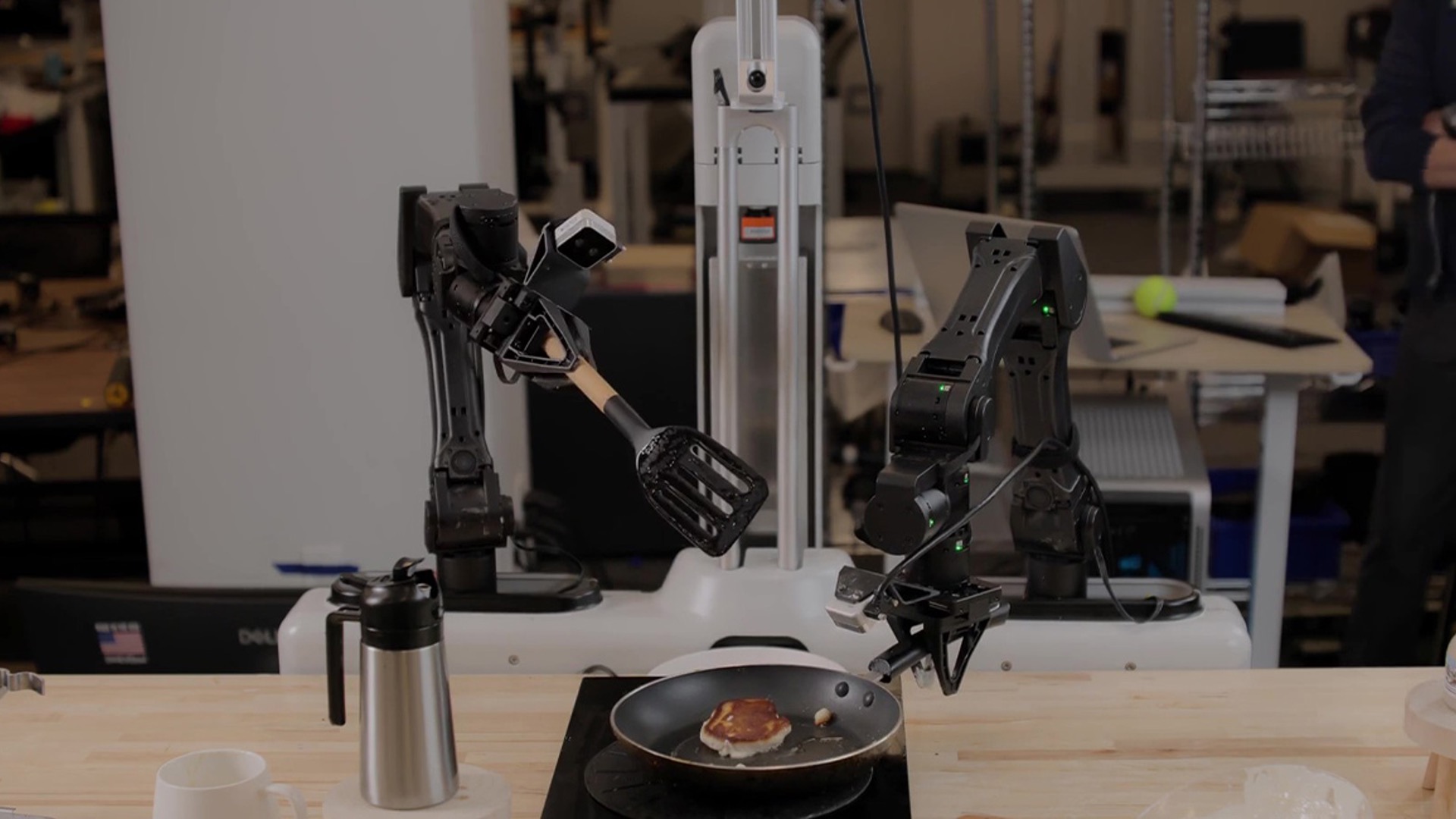
Skild AI has launched S1, a robot foundation model built on NVIDIA physical AI tooling that picks up unseen long-horizon tasks after a single video demonstration.
Skild AI has released S1, a robot foundation model that learns tasks it has never encountered before from a single video demonstration. The Pittsburgh-based company built the model on NVIDIA's physical AI stack, according to NVIDIA's developer blog, and launched it last week. The pitch is aimed squarely at factories, warehouses and production lines, where layouts shift and new products arrive faster than most robot fleets can be reprogrammed.
The problem S1 targets is well known to anyone running automation. Traditional industrial robots execute fixed motion paths, so a changed bin location or a new part shape usually means an integrator, a new program and hours or days of downtime. Skild AI's claim is that a single recorded demonstration — a human or another robot performing the task once — is enough for S1 to generalize to the new job without that reprogramming cycle.
What separates S1 from earlier imitation-learning work is the horizon. Most demonstration-based methods handle short, repetitive motions such as picking or placing a single object. Skild is describing long-horizon tasks, meaning multi-step sequences where the robot has to chain actions together and recover when something drifts. That is the capability gap that has kept general-purpose robots out of mixed-model production environments.
NVIDIA's involvement matters for how the model gets deployed. The company's physical AI tooling covers simulation, synthetic data generation and robot training pipelines, which gives Skild a route to test and refine S1 without tying up real hardware. NVIDIA has spent the past two years pushing this stack at robot developers, and Skild is now one of the more visible startups building a foundation model on top of it.
Skild AI has not disclosed pricing, the specific robot arms or humanoids S1 supports, or how many demonstrations it needs before performance degrades on harder tasks. Those details will determine whether the model is a real step toward flexible automation or a well-framed demo. The next signal to watch is customer deployments on live production lines, where task variation is messier than any lab benchmark.