Scott Hanselman: Nursing-Style Preceptorship Could Replace Traditional Junior Dev Training as AI Takes Over Routine Coding
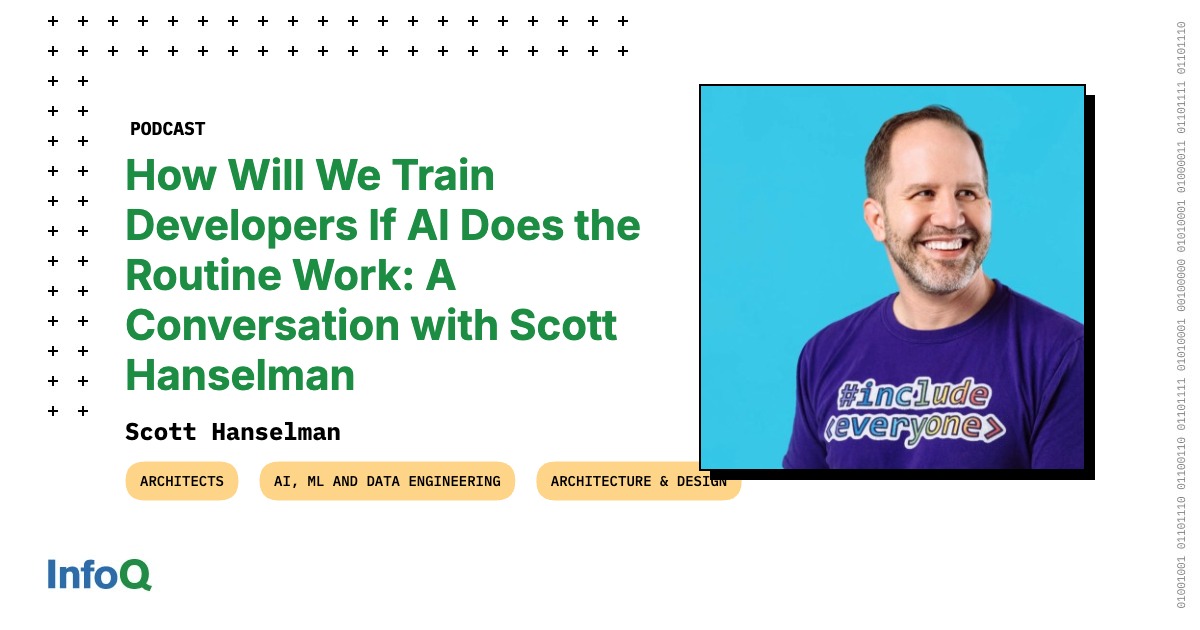
As AI agents absorb the entry-level coding tasks that once trained new developers, Scott Hanselman argues software needs a structured preceptorship model borrowed from nursing.
Scott Hanselman wants the software industry to stop pretending that junior developers can learn the job the way they always have. In a new podcast conversation with Michael Stiefel on InfoQ, the longtime Microsoft developer and educator said AI agents now handle most of the routine work that entry-level programmers were once hired to do — and that the apprenticeship pipeline built around that work is collapsing. His proposed fix: borrow the preceptorship model from nursing, where experienced practitioners formally supervise newcomers through structured clinical hours.
The problem is not that juniors have nothing to learn, but that the tasks which used to teach them are disappearing. Writing boilerplate, fixing small bugs, wiring up CRUD endpoints, and hunting down simple configuration errors were never glamorous, yet they gave newcomers thousands of small feedback loops. Hanselman's point is that when an agent handles those tasks in seconds, a junior who spends the day reviewing generated code never develops the instincts that come from getting things wrong and repairing them.
Nursing's answer to a similar problem is worth studying. In that field, students do not graduate into unsupervised practice; they log supervised hours under a designated preceptor who is accountable for their decisions and signs off on their competence. Hanselman suggests software adopt an equivalent structure, pairing a junior with a senior engineer who owns the junior's work product, reviews it line by line, and gradually widens their scope as trust is earned. That is closer to a formal, named relationship than the informal mentorship most teams rely on today.
The economics cut against the idea in the short term. A preceptor's time is expensive, and the payoff arrives in months or years, which is a hard sell for companies that measure engineering output quarter by quarter. But Hanselman's framing implies the alternative is worse: a field that stops producing mid-level engineers because no one ever trained them. The people who can prompt an agent and read its output are not the same as the people who can architect a system, diagnose a subtle race condition, or tell when generated code is confidently wrong.
Hanselman has spent years teaching developers through his talks, blog, and podcasts, and he is not arguing that AI should be kept away from juniors. The question he leaves open is who pays for the supervised hours and who certifies that a junior is ready to work without a preceptor. Until the industry answers that, teams will keep hiring for experience that fewer and fewer engineers have had the chance to acquire.