Sanders Bill Would Jail AI Developers for 20 Years Over Harmful Models
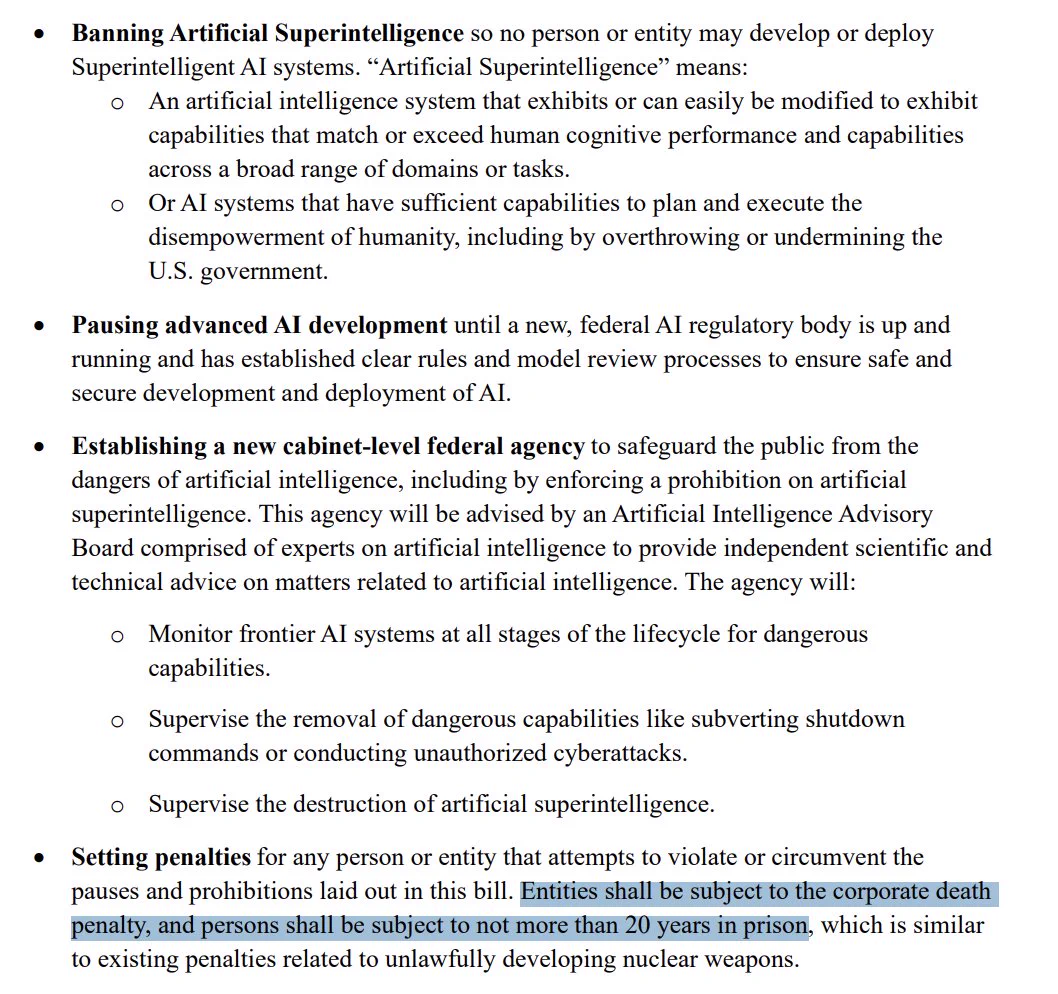
A draft proposal from Senator Bernie Sanders would make AI developers criminally liable for severe harms caused by their models, with a maximum sentence of 20 years.
Senator Bernie Sanders has introduced legislation that would expose AI developers to prison sentences of up to 20 years when their models cause serious harm, according to a bill circulating among industry watchers this week. The proposal marks the first attempt to write federal criminal law into the model-building process rather than the downstream uses of AI systems. No formal legislative text has been released, and the public record so far rests on a social media post and subsequent discussion rather than a filed bill.
The mechanism at the center of the proposal ties liability to the developer, not the deployer. That breaks with the product-liability framework that has governed software for decades, where a company shipping defective code generally faces civil damages rather than jail time. Under Sanders' approach, certain AI outcomes would be treated closer to a criminal act than a tort, putting researchers, lab executives and potentially open-source maintainers in the path of felony charges depending on how the statute defines causation and intent.
The specifics that would decide the bill's reach are missing. There are no defined harm thresholds, no list of covered offenses and no mens rea standard. Without those, it is impossible to say whether a model that leaks training data, answers a bioweapon query or contributes to a financial crash would trigger the 20-year maximum. The gap between a headline number and an enforceable statute is where this proposal currently sits.
Reaction among AI practitioners split along familiar lines. Some argued that criminal exposure would chill open-source work and push talent toward jurisdictions with lighter rules, while others countered that voluntary safety commitments have failed to prevent documented harms and that only credible penalties will shift lab behavior. Industry trade groups have already begun making the overseas-relocation argument, which has become a standard response to nearly every proposed US AI restriction.
Washington has spent the past two years regulating AI through disclosure requirements, compute thresholds and agency guidance. Sanders' move, if it advances, would reframe the debate around personal accountability for the executives and engineers who sign off on training runs and release decisions, a prospect with no precedent in US technology regulation. The immediate question is whether Sanders files formal text and whether it draws co-sponsors, which would signal legislative intent rather than a messaging play. Watch for the bill's definitions of harm, its treatment of open-weight releases and whether any committee takes it up. Until a draft exists, the 20-year figure signals direction, not law.
For teams shipping models, the practical exposure depends entirely on definitions that do not yet exist. Until text lands, the useful move is to document release decisions and safety evaluations as if they could be read by a prosecutor, and to track whether the bill's causation language reaches contributors to open-weight projects rather than only executives who approve launches.