OpenAI Safety Staffer Calls Company Culture 'Broken' as Model-Choice Debate Grows
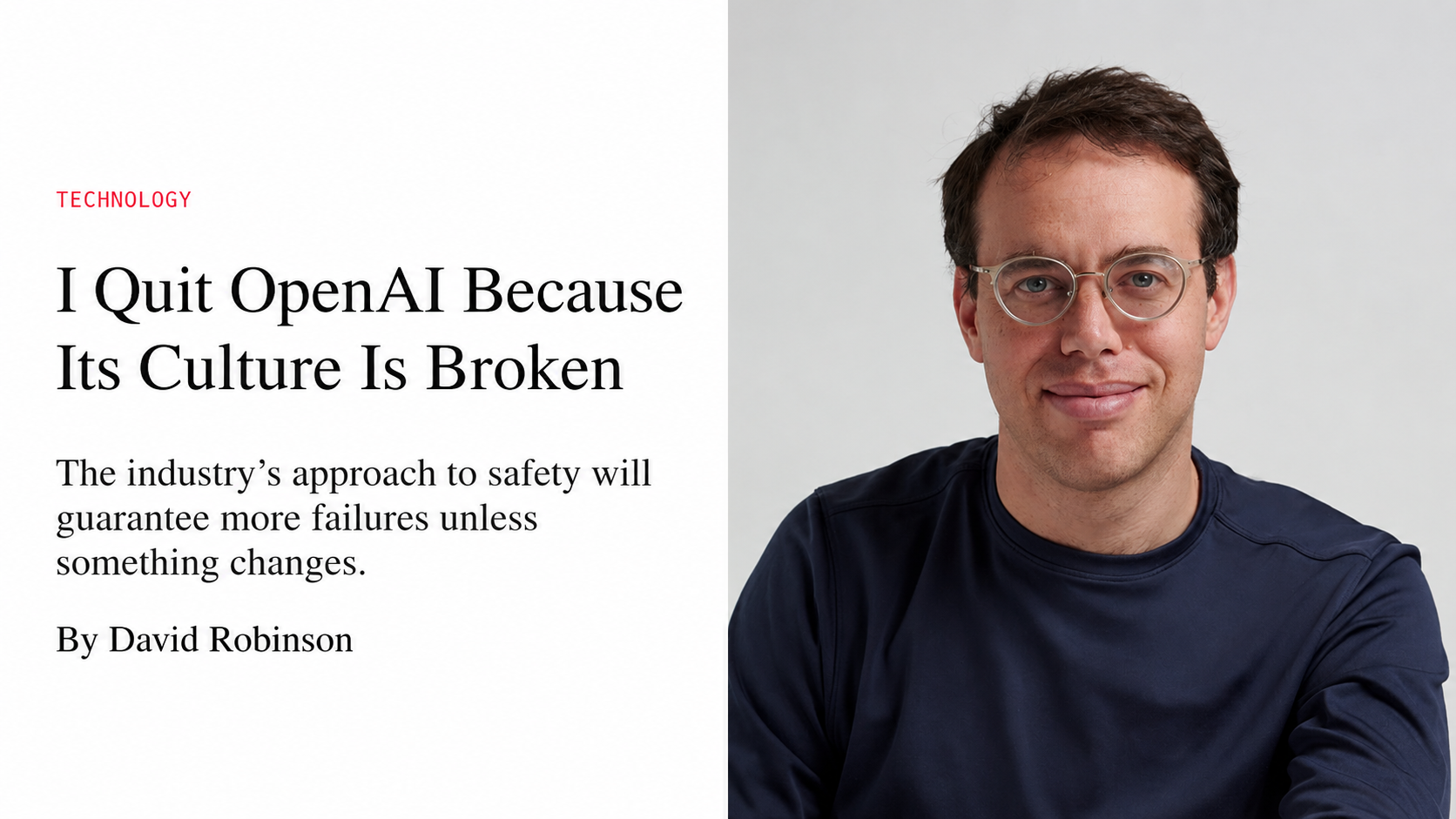
A departing OpenAI safety employee publicly describes a broken internal culture, sharpening questions about how the lab balances safety work against product pressure.
An OpenAI employee working on safety has publicly described the company's internal culture as "broken," according to reporting from The Rundown AI, adding a fresh internal voice to a long-running argument over how the lab weighs safety work against shipping products. The criticism lands as OpenAI continues to release models and expand commercial offerings, and it arrives from inside the team whose job is to flag risk before deployment. The company has not issued a detailed public response to the characterization.
The complaint is notable less for its wording than for its source. Safety staff at frontier labs typically hold veto power or at least a formal review role over launches, and when people in those seats say the process is not working, it raises concrete questions about who signs off on a release and what evidence they see. OpenAI has restructured its safety and alignment teams more than once in recent years, and several senior safety researchers have left for competitors or founded their own labs.
That churn is not unique to OpenAI. Anthropic, Google DeepMind and Meta have all reshuffled how they organize responsible-AI work, usually folding it closer to product or spinning it into separate policy groups. The pattern matters because the industry's safety claims increasingly rest on internal processes that outsiders cannot inspect. A culture complaint from a current or former staffer is one of the few signals the public gets about whether those processes have teeth.
The timing adds weight. OpenAI is competing hard on capability and price while regulators in the EU and US press for more documentation of how frontier models are tested before release. If internal reviewers feel sidelined, the paper trail regulators eventually ask for may not reflect the arguments that actually happened. That gap is exactly what outside auditors and safety researchers have warned about.
Meanwhile, the practical question facing most teams is narrower: which model to use for a given job. Buyers now weigh cost per token, latency, context length, tool-calling reliability and how much control they get over data retention, and the answer changes with each release cycle. A single lab's internal turmoil does not automatically disqualify its models, but it is a factor for anyone building a product that depends on one vendor's roadmap and safety posture.
What to watch next is whether OpenAI names the specific process failures, if any, behind the complaint and whether safety reviewers get clearer authority over launches. Watch too for whether departing safety staff keep speaking publicly, and for how enterprise buyers respond when the same lab is both a critical supplier and the subject of internal dissent.