OpenAI's GPT-6 Astra Ultrafast Hits API on NVIDIA Blackwell, Claiming 8x Faster Token Generation
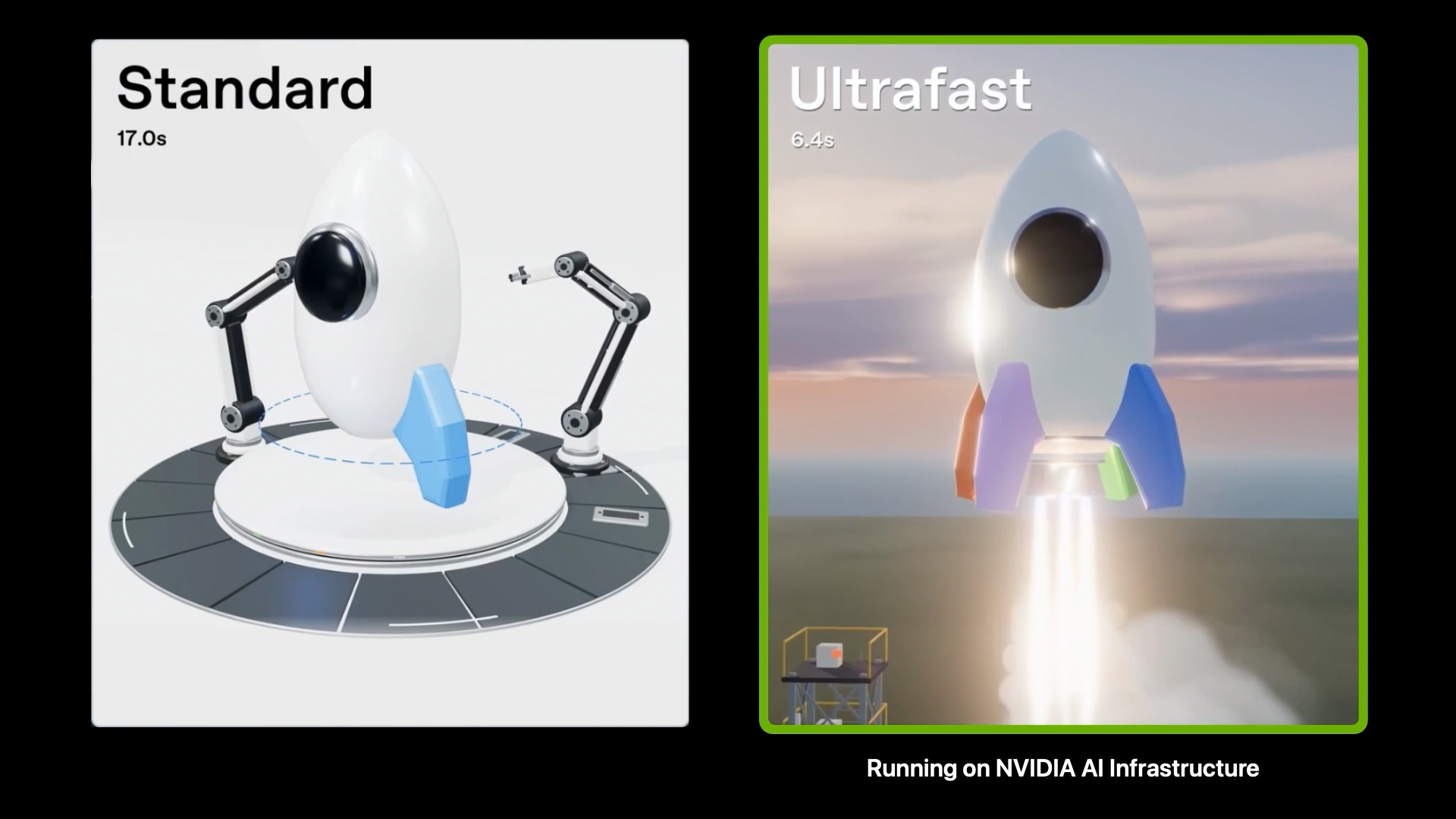
OpenAI has launched GPT-6 Astra Ultrafast, a faster mode of its newest model running on NVIDIA Blackwell GPUs and generating tokens at up to eight times the speed of Astra Standard.
OpenAI has released GPT-6 Astra Ultrafast, a higher-throughput mode of its newest flagship model that runs on NVIDIA Blackwell GPUs and is now live in the OpenAI API. The company says the mode produces tokens up to eight times faster than Astra Standard, the default setting for the same model. Access is also being extended to eligible ChatGPT Work and Codex users, putting the speed boost in front of enterprise and coding customers first.
The gap between Standard and Ultrafast comes down to inference work done on Blackwell's architecture rather than a different model. OpenAI tuned its serving stack to exploit features of the hardware, and NVIDIA is positioning the result as evidence that its latest data-center chips translate into real latency gains for frontier models. Token generation speed matters most in agentic and coding workloads, where a model may emit thousands of tokens across a multi-step task and users feel every second of delay.
NVIDIA's blog post frames the launch as a hardware-software pairing, the kind of joint announcement the two companies have made repeatedly since OpenAI began training and serving models on NVIDIA accelerators. Neither company disclosed pricing for Ultrafast, the exact throughput figures behind the 8x claim, or which data centers are serving the mode. The "up to" qualifier also leaves room for slower results depending on prompt length, output length and load.
The release lands as competition over inference cost and speed has become as intense as the race to train bigger models. Google, Anthropic and Meta all offer tiered model options that trade quality for latency, and several startups pitch faster serving as their main product. OpenAI's decision to ship Ultrafast as a mode of GPT-6 Astra rather than a separate model keeps the choice simple for developers: same weights, same outputs, different speed.
For developers, the practical question is whether the faster mode changes what they build. Lower latency makes real-time agents, interactive coding assistants and voice-style interfaces more viable, but only if output quality holds at the same level as Standard. OpenAI has not published side-by-side benchmark data comparing the two modes on reasoning or coding evaluations, which is the number most engineering teams will want before switching production traffic.
Watch for third-party latency tests and any pricing details in the coming days, plus whether OpenAI extends Ultrafast beyond Work and Codex users to the broader ChatGPT base. The bigger signal is the dependency itself: the fastest tier of OpenAI's newest model is tied to one vendor's silicon, and that relationship now shapes what the company can ship and how quickly.