NVIDIA Ships Isaac ROS 5.0, Pushing Agentic Robots Onto Open-Source Rails
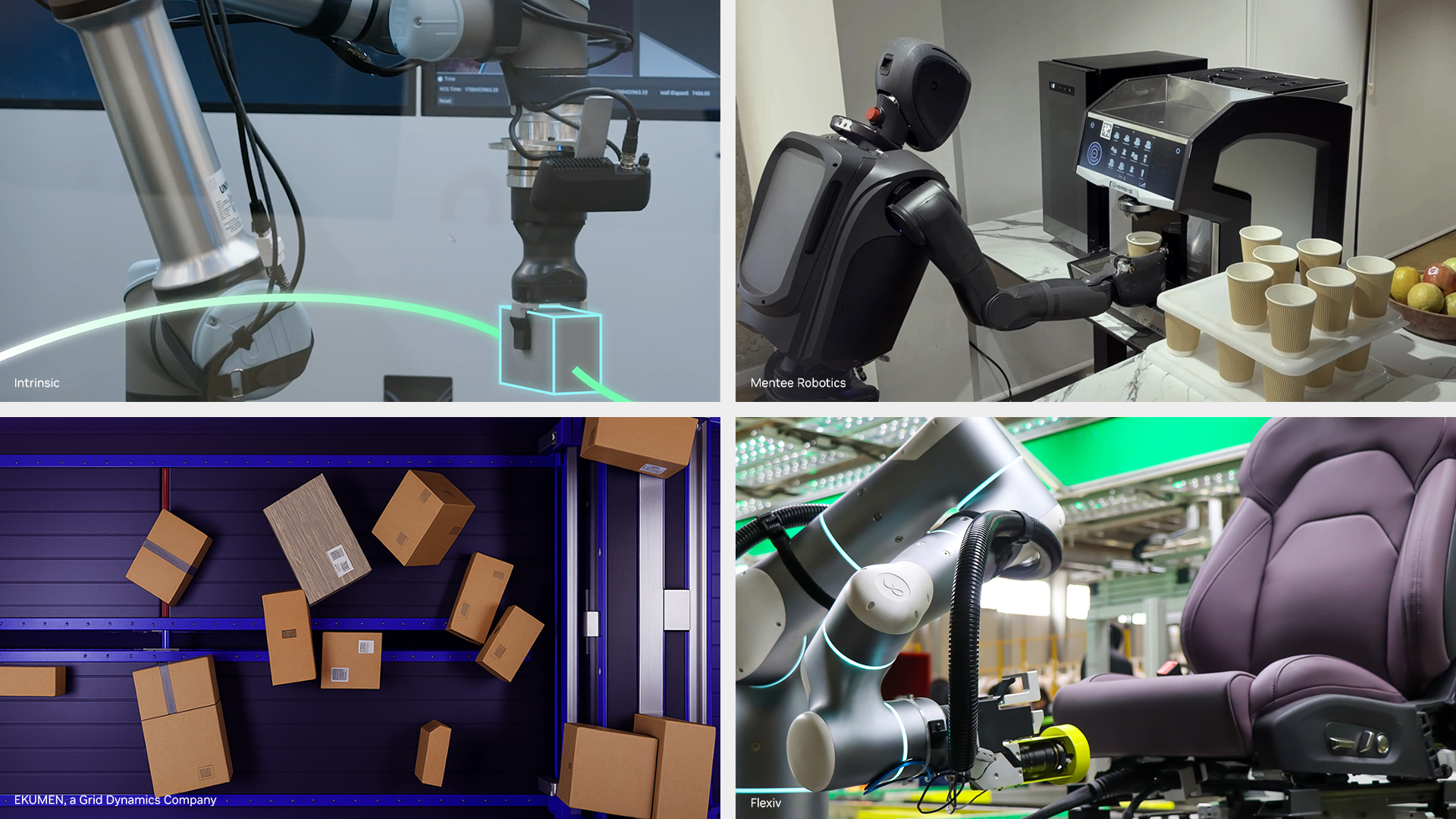
NVIDIA's Isaac ROS 5.0 bundles GPU-accelerated perception and reasoning packages for ROS developers building robots that act on their own.
NVIDIA released Isaac ROS 5.0 today, a set of GPU-accelerated software packages layered on top of the open-source Robot Operating System, aimed at developers building robots that can perceive, reason and act in changing environments. The company announced the release on its blog, framing it as a response to demand for physical AI models and tooling rather than another incremental driver update. The move matters because ROS remains the default plumbing for academic and commercial robotics work, and whatever NVIDIA ships into it tends to become the path of least resistance for teams short on time.
The packages target the agentic end of robotics, where a machine is expected to chain perception into decisions and then into motion without a human scripting every step. That is a heavier compute load than classic ROS nodes were designed around, which is where the GPU acceleration comes in: image processing, depth estimation and model inference run on NVIDIA hardware instead of the CPU. Developers already invested in ROS 2 can pull the packages into existing workspaces rather than rebuild their stacks from scratch.
The timing puts NVIDIA deeper into territory mapped by Open Robotics, the organization behind ROS, and by a widening field of humanoid and warehouse automation startups that lean on ROS as their integration layer. NVIDIA has spent the past two years positioning Isaac as its umbrella for simulation, synthetic data generation and robot foundation models, and each ROS release tightens the coupling between that toolchain and the software developers actually run on hardware. For teams choosing a stack, the practical effect is fewer custom glue layers between a trained model and a working robot.
Open source is doing double duty here. ROS itself is permissively licensed and community-maintained, so NVIDIA's contributions flow back into a codebase that competitors also build on, including AMD, Intel and Qualcomm, all of which have courted robotics developers. That dynamic cuts both ways: NVIDIA gets adoption and mindshare, while its rivals get a clearer view of what the reference implementation looks like. The real competition is less about the packages than about which silicon teams buy once their prototypes leave the lab.
What to watch is whether Isaac ROS 5.0 shortens the gap between demo videos and deployed fleets, which has been robotics' persistent embarrassment. Agentic behavior in unstructured spaces, warehouses with moved pallets, homes with pets, remains the hard part, and no release date fixes that. The open question for developers is how much of the reasoning loop NVIDIA expects to run on its hardware, and how much remains portable if they switch.