NVIDIA's RTX Spark Packs 1 Petaflop and 128GB Unified Memory Into a Single PC Superchip
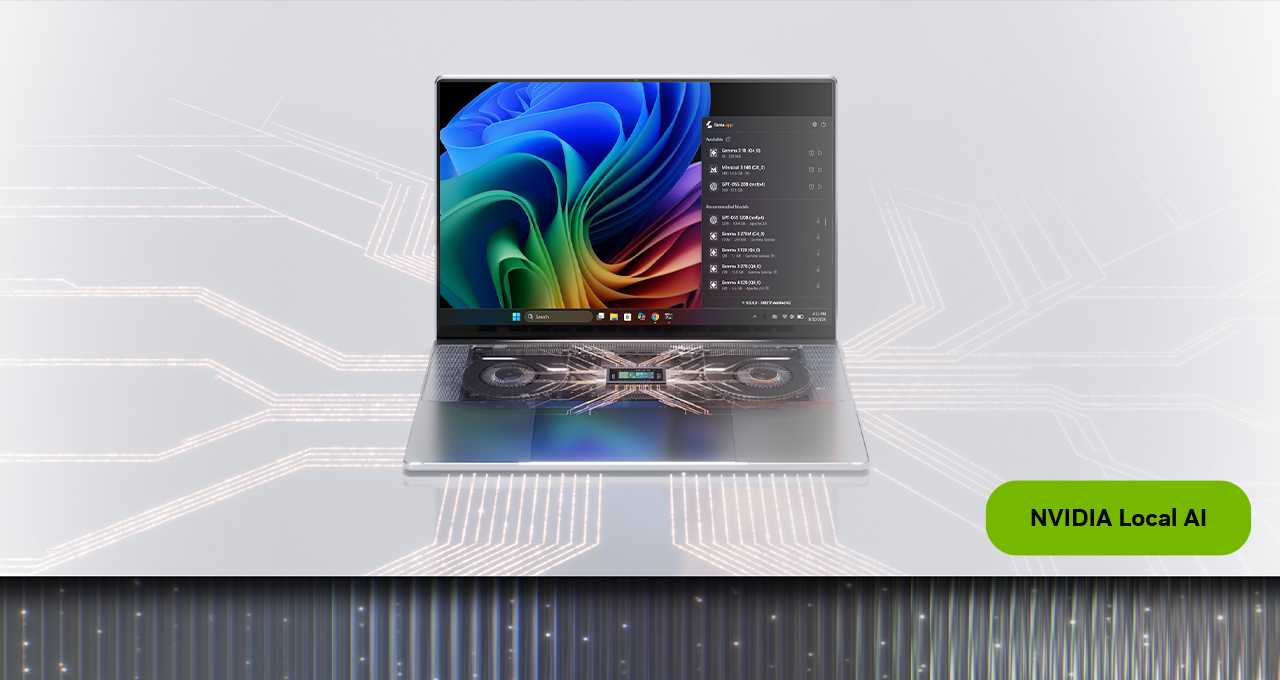
NVIDIA says RTX Spark fuses gaming, creative and AI workloads onto one chip, with developer support already lined up across the PC app ecosystem.
NVIDIA has introduced RTX Spark, a single superchip it describes as a reinvention of the personal computer, combining what would normally be three machines — a gaming PC, a creative workstation and a personal AI supercomputer — into one system. The company claims the chip delivers up to 1 petaflop of AI compute and up to 128GB of unified memory, with the full NVIDIA RTX software stack running on top. NVIDIA positions the launch as the start of a new PC category rather than a routine hardware refresh.
The headline figure is the memory. Unified architectures let a CPU, GPU and AI accelerators draw from one pool instead of shuttling data across separate memory spaces, which matters most when a model is too large to fit in conventional graphics memory. At 128GB, RTX Spark would let a local machine hold and run models that today generally require a workstation card or a cloud endpoint. The 1-petaflop AI number puts it in the range of small dedicated AI appliances rather than typical consumer laptops.
NVIDIA's framing leans heavily on software. The pitch is that RTX Spark ships with the RTX and AI stack already in place, so existing applications can take advantage of it rather than waiting for a new generation of software. The company says the global PC app ecosystem is ready for the chip, a claim that matters because hardware without optimized runtimes tends to sit idle. Developers building inference tools, creative suites and game engines are the audience NVIDIA needs to convert.
The announcement lands in a crowded moment for on-device AI. Chipmakers and PC vendors have spent the past two years pushing neural processing units into laptops, but most of those parts target light workloads — background transcription, image cleanup, small assistants. A petaflop-class part with a large unified memory pool points at a different use case: running capable models locally, with no network round trip and no per-token bill. That is a direct challenge to cloud inference economics for privacy-sensitive or latency-sensitive work.
What NVIDIA has not yet detailed publicly is the price, the shipping date, or which OEMs will build systems around RTX Spark. Those three unknowns will decide whether this becomes a developer platform or a halo product. The practical test is whether independent developers can run a mid-sized open model on the chip without hand-tuning, and whether the unified memory is actually addressable by the frameworks they already use. Until benchmarks and pricing land, treat the 1-petaflop and 128GB figures as NVIDIA's targets, not measured results.