Nvidia Puts a Number on AI Factory Economics: $60M Per Megawatt
Nvidia is pitching a framework for measuring AI factory returns as operators weigh capital commitments of roughly $60 million per megawatt of capacity.
Nvidia has begun framing the economics of the data centers it calls AI factories around a single hard figure: about $60 million in capital cost for every megawatt of capacity. The company laid out the math in a blog post arguing that operators will only sign off on builds at that scale when they can see a credible return on that spending. The pitch lands as AI infrastructure commitments are increasingly measured in megawatts and, in some announced projects, gigawatts rather than racks or servers.
The cost figure matters because of how fast the unit of construction has changed. A single gigawatt of AI capacity implies something on the order of $60 billion in capital outlay at Nvidia's own benchmark, before accounting for power contracts, land, cooling and the networking that ties the facility together. That is a balance-sheet decision on the scale of a national energy project, and it explains why operators have grown louder about utilization and payback periods rather than raw chip counts.
Nvidia breaks the return question into three components, starting with earning capacity — what a given factory could realistically generate in revenue over a year. That figure depends on how many accelerators are installed, how continuously they run, and what customers are willing to pay for the compute they produce. Utilization is the variable that separates a profitable site from an expensive shell, since idle GPUs still draw power and still depreciate.
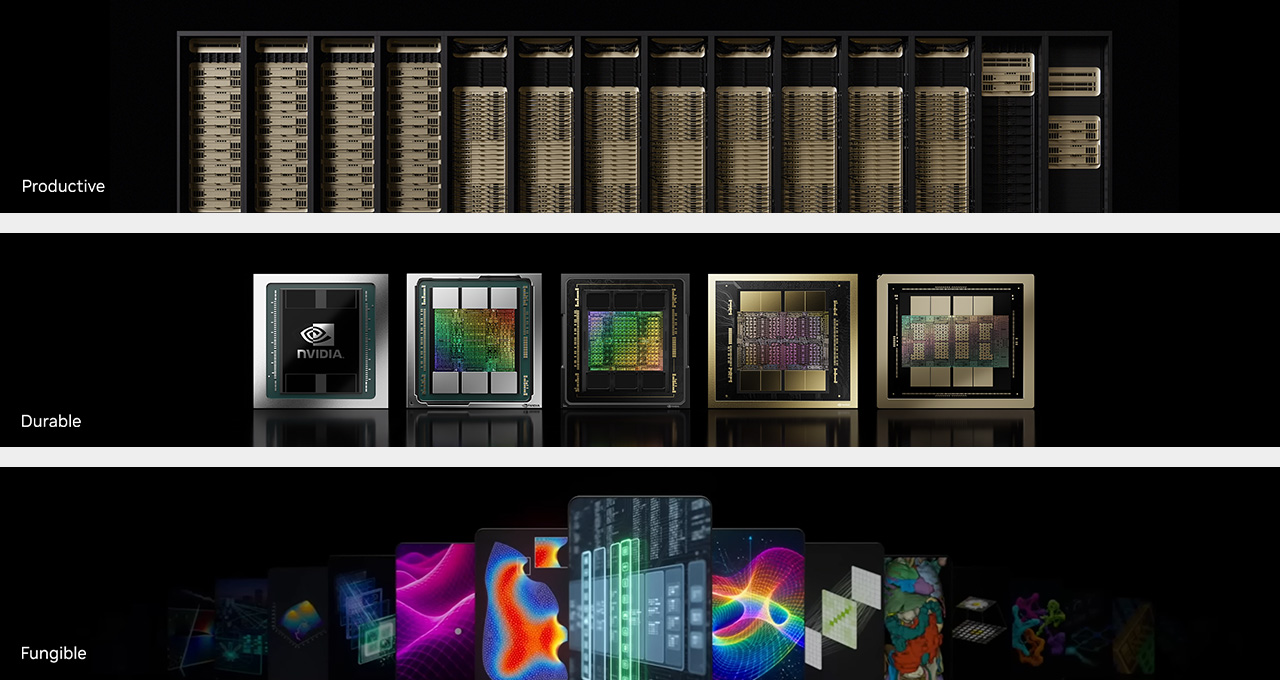
The second and third legs of the framework cover how long the facility stays productive and how easily its output can be resold or repurposed — durability and fungibility, in Nvidia's phrasing. Durability speaks to whether the hardware and the building can keep earning as successive chip generations arrive, while fungibility concerns whether capacity built for one workload can be shifted to another as demand moves. Together they address the fear that an AI factory becomes obsolete or stranded before it pays for itself.
The framing is not neutral. Nvidia sells the systems that fill these factories, so its interest lies in showing that the spending is justified and repeatable, not in talking down demand. But the company is also responding to a real shift in how buyers behave: hyperscalers and new entrants alike are being asked by their own investors to justify multiyear infrastructure budgets with something closer to an engineering model than a growth story. Putting a per-megawatt price tag in public gives those buyers a common vocabulary.
What to watch is whether the $60 million-per-megawatt benchmark holds as power delivery, cooling and grid interconnection costs move, and whether operators disclose actual utilization figures that would let outsiders test Nvidia's return model against reality. Until those numbers surface, the framework remains a sales argument as much as an analytical one.