NVIDIA Pushes Real-Time AI for Broadcast and Streaming at IBC 2024
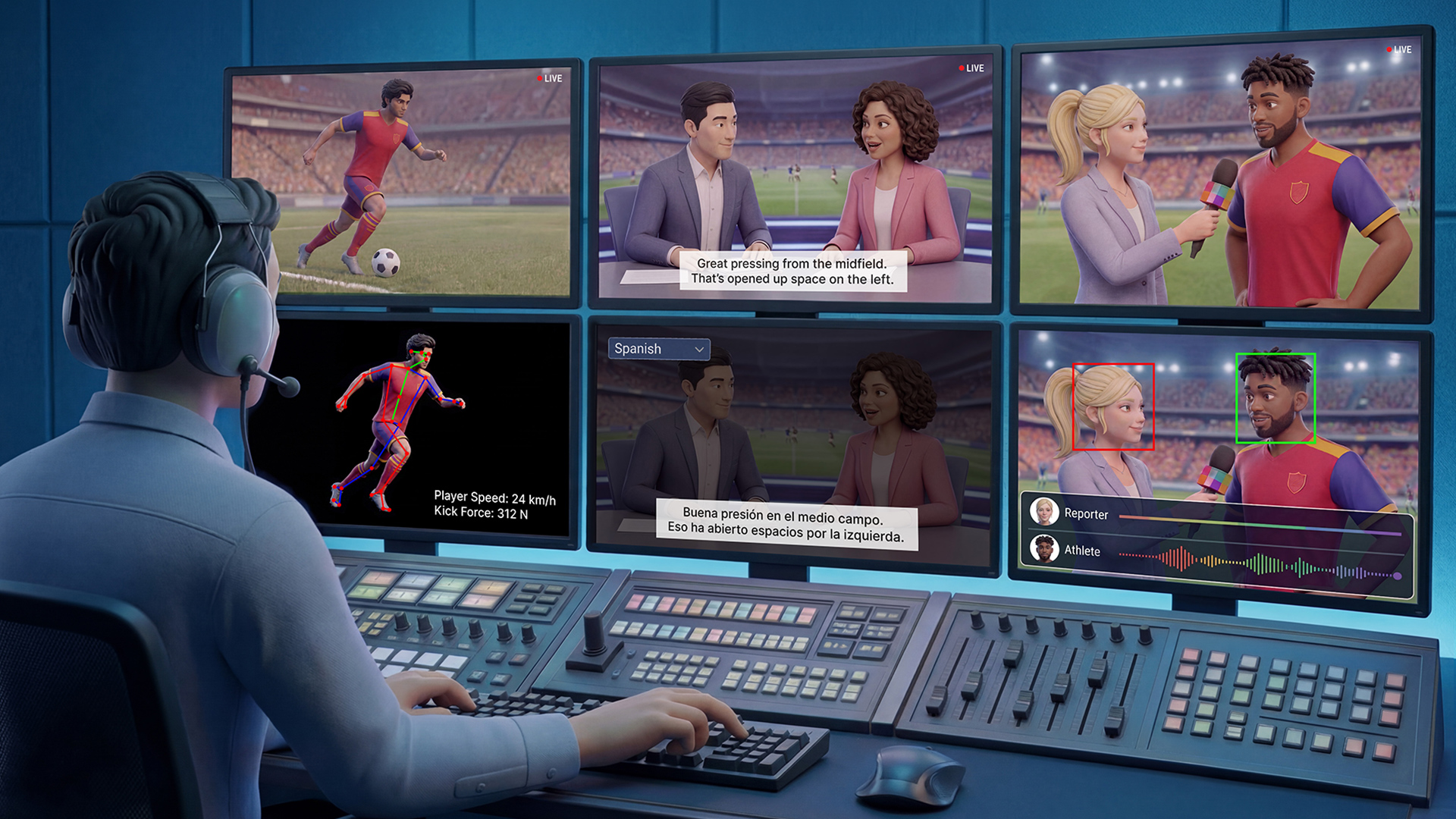
At IBC 2024 in Amsterdam, NVIDIA unveiled new AI tools aimed at live sports production, cloud streaming, and global media workflows.
AMSTERDAM — NVIDIA used this week's IBC conference to make its case that AI is ready for prime time in broadcast and streaming. The company rolled out a slate of real-time AI technologies targeting live sports, studio production, and global content delivery, aiming to cut the latency and cost that have long kept AI out of live workflows. The announcements arrive as more than 44,000 attendees from 170 countries gather here through Sept. 14 for the annual media and entertainment trade show.
The centerpiece is a new suite of AI microservices built on NVIDIA's existing broadcast and streaming platforms. These tools are designed to handle tasks like automated camera tracking, real-time graphics overlays, and instant replay analysis without the need for massive on-site computing clusters. NVIDIA says broadcasters can run these workloads on standard servers with its GPUs, pushing intelligence closer to the action rather than routing everything through distant data centers.
For sports, the company demonstrated AI that can generate highlight clips in near real time and track player movements across multiple camera feeds. That could let producers deliver personalized replays to viewers or automatically package short-form clips for social media during a live match. NVIDIA also showed how its technology can upscale lower-resolution footage to 4K on the fly, a feature that could extend the life of legacy sports archives.
Cloud streaming is another focus, with NVIDIA aiming to reduce the lag between a user's command and the screen response. The company says its latest encoding and decoding hardware, combined with AI-driven bitrate optimization, can maintain video quality even on congested networks. This matters as global platforms push toward interactive live events, where a delay of even a few seconds can break the experience.
The move comes as broadcasters face pressure to deliver more content across more screens while keeping budgets flat. Traditional production methods that rely on dedicated hardware and manual editing are becoming harder to scale. NVIDIA's pitch is that software-defined AI workflows can flex up or down based on demand, letting smaller outlets access tools that were once only viable for major networks.
Some industry observers note that the real test will be integration. Broadcasters already juggle a patchwork of legacy systems, and convincing them to swap in AI-driven tools requires proof that the technology works reliably under the pressure of live events. NVIDIA is betting that its partnerships with major vendors at IBC will help bridge that gap.
What remains unclear is how quickly these tools will move from demos to daily use. NVIDIA has not disclosed pricing or which specific broadcasters have committed to deploying the new suite. But with IBC running through Saturday, the company is using the show floor to court the engineers and executives who will decide whether AI becomes a standard part of the broadcast chain.