NVIDIA Pushes Layered Safety as Physical AI Hits Roads and Factories
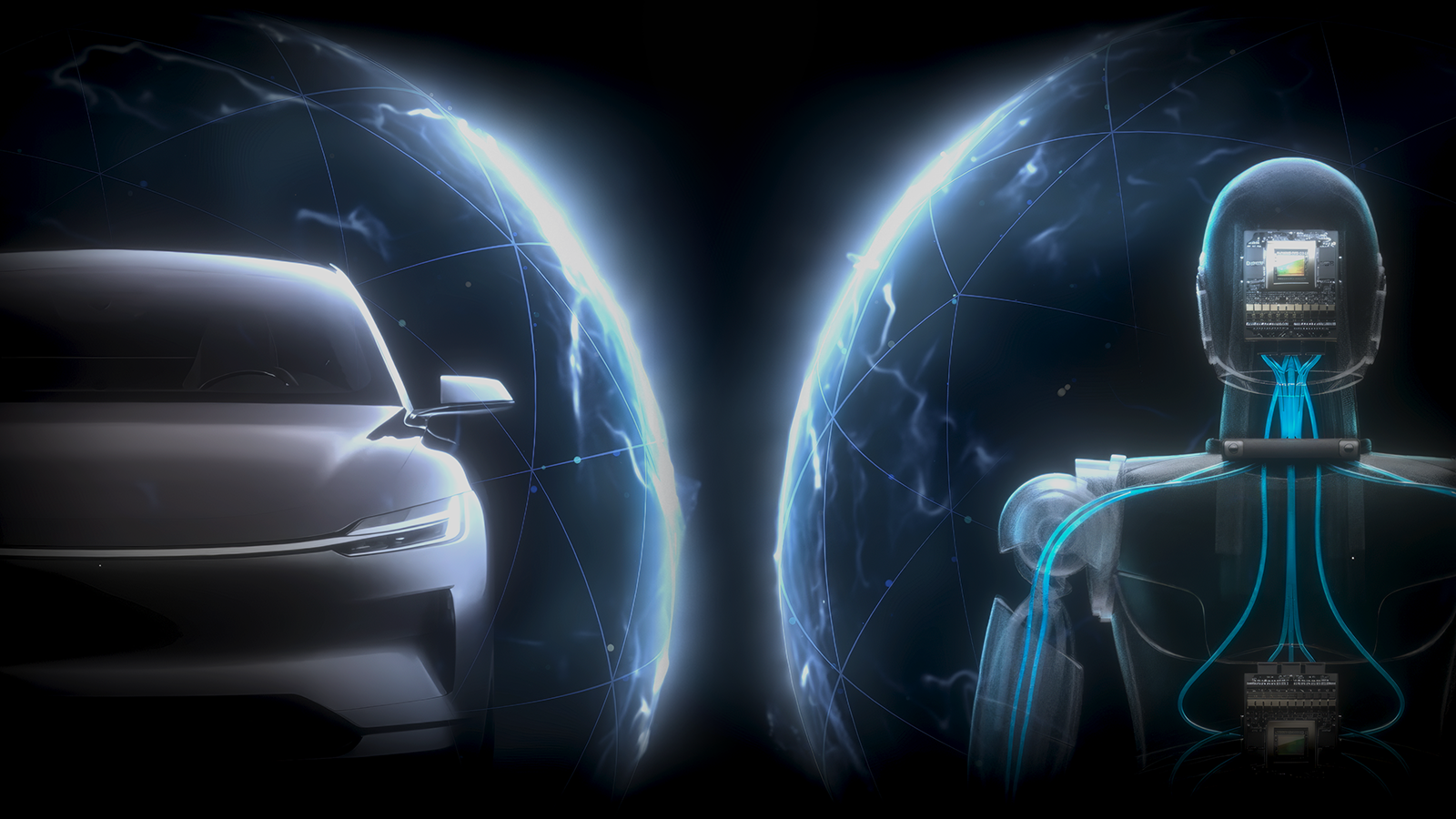
With tens of millions of autonomous vehicles and industrial robots expected by 2035, NVIDIA argues safety must be engineered into every layer of the stack, not bolted on at the end.
NVIDIA is making the case that safety for physical AI has to be built into every layer of the stack as autonomous machines move from lab demos to mass deployment. The company's argument lands as new forecasts put the scale of that shift in sharp relief: ABI Research projects an installed base of 49 million level 3 to level 5 autonomous vehicles by 2035, while Omdia expects roughly 60 million industrial robots to be deployed between 2026 and 2035. Those machines will share roads, factory floors and warehouses with people, which raises the cost of getting safety wrong.
The two forecasts describe different but converging markets. Level 3 through level 5 vehicles are the higher tiers of driving automation, where the system handles more of the driving task and, at the top end, no human intervention is required. Industrial robots, meanwhile, are spreading beyond caged workcells into environments where they work alongside human employees. Together they represent a fleet measured in the tens of millions, a scale that turns isolated safety incidents into a systemic risk question.
NVIDIA's position is that safety cannot be treated as a final validation step or a single certified component. Physical AI systems combine perception models, planning software, compute hardware and actuators, and a failure anywhere in that chain can produce a real-world accident. The company frames the problem as a stack-wide engineering discipline, where each layer carries its own requirements and the interactions between layers are tested, not assumed.
That framing matters because the regulatory picture is still fragmented. Vehicle automation is governed by a patchwork of national and state rules, while industrial robot safety has long relied on standards built around separation between machines and people. As collaborative robots and autonomous mobile machines move into shared spaces, existing rules may not map cleanly onto systems that learn and update over time. Vendors that can show documented safety processes across the full stack may find it easier to win approvals and customer trust.
The commercial stakes are considerable. A single high-profile failure can stall deployment timelines, trigger recalls and invite tighter regulation for an entire product category. That gives companies an incentive to publish safety architectures and third-party assessments early, rather than waiting for incidents to force disclosure. NVIDIA, which supplies compute and software platforms used across robotics and automotive programs, has a direct interest in that standardization effort.
What to watch next is whether layered safety claims translate into verifiable practice. The open question is how regulators and customers will audit systems that mix deterministic code with learned models, and whether the industry converges on shared testing benchmarks before deployment volumes climb. With the first of those 60 million industrial robots expected on floors starting in 2026, the window for settling those questions is narrowing.