NVIDIA Pitches Its Stack as the Robotaxi Market Heads Toward $400 Billion
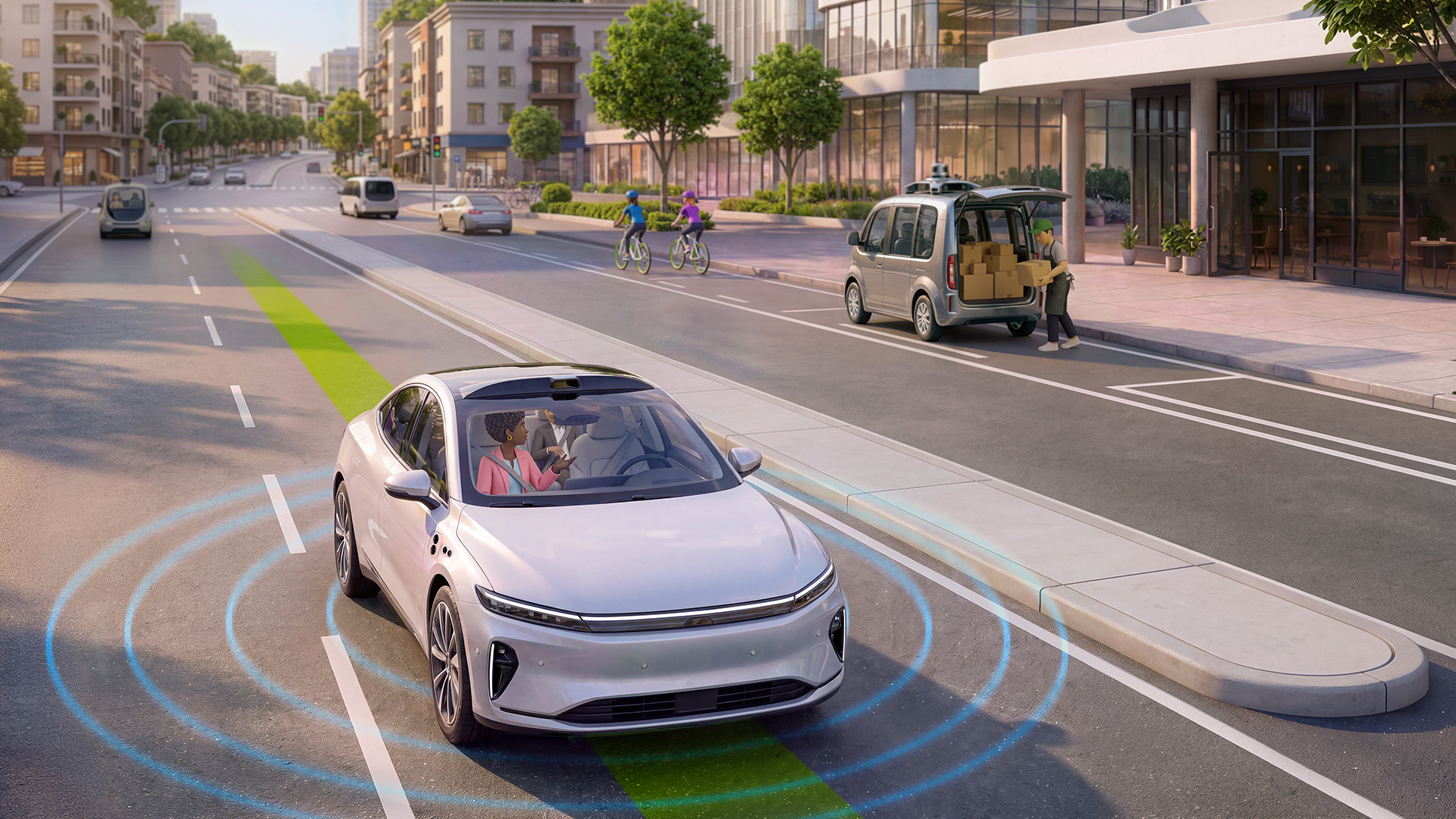
Robotaxi operators racing to scale driverless fleets are leaning on NVIDIA compute and simulation tools, as the market is projected to reach $400 billion by 2035.
NVIDIA is positioning its hardware and software stack as the common layer for robotaxi operators as the driverless market scales toward an estimated $400 billion by 2035. The company says more than 6 million commercial vehicles could be in operation by then, with autonomous fleets already carrying passengers on some of the world's most congested and complicated streets. The pitch lands as robotaxi companies shift from proving a single driverless car can work to the harder problem of running thousands of them at once.
Getting one driverless vehicle onto public roads is a research milestone. Running a commercial fleet is an operations problem: vehicles have to perceive reliably in rain, glare and construction zones, and every mile has to be validated before it is driven for real. NVIDIA's argument is that its GPUs, in-vehicle compute platforms and simulation tools give operators a shared foundation for both halves of that job, rather than each company rebuilding the same pipeline from scratch.
The company's simulation products, including its Omniverse-based tools, let operators generate synthetic driving scenarios and replay rare edge cases at scale, which matters when real-world testing miles are expensive and slow to accumulate. Training and validating perception and planning models on NVIDIA hardware also keeps operators inside a toolchain that already dominates AI development more broadly. That familiarity is part of the sell: engineers who already write CUDA and train on NVIDIA GPUs can move into autonomy work without adopting an unfamiliar stack.
Several robotaxi leaders have signed on publicly. NVIDIA has named partners across the United States, China and Europe, though the specific commercial terms of those relationships have not been disclosed. The company is not building its own robotaxi service, a distinction that matters to operators wary of a supplier that could become a competitor. Instead it is selling picks and shovels into a market where the capital costs of compute and simulation are climbing alongside fleet size.
The $400 billion figure is a projection, not a booked market, and it depends on regulatory approval in cities that have so far moved cautiously. Robotaxi expansion in the U.S. has been slowed by permitting fights and high-profile safety incidents, and Chinese operators face their own local rules. If deployments stall, demand for fleet-scale compute stalls with them.
What to watch next is whether NVIDIA's partners disclose fleet sizes and per-vehicle compute costs, which would show whether the stack is actually shipping at scale or still in pilot programs. The other open question is consolidation: if a handful of operators win their cities, they may build more of their own silicon and software, reducing their dependence on any single supplier. For now, NVIDIA is betting that the robotaxi buildout runs through its data centers and its chips inside the cars.