NVIDIA Pitches Frontier AI Agents as the Missing Labor in Omniverse Simulation Work
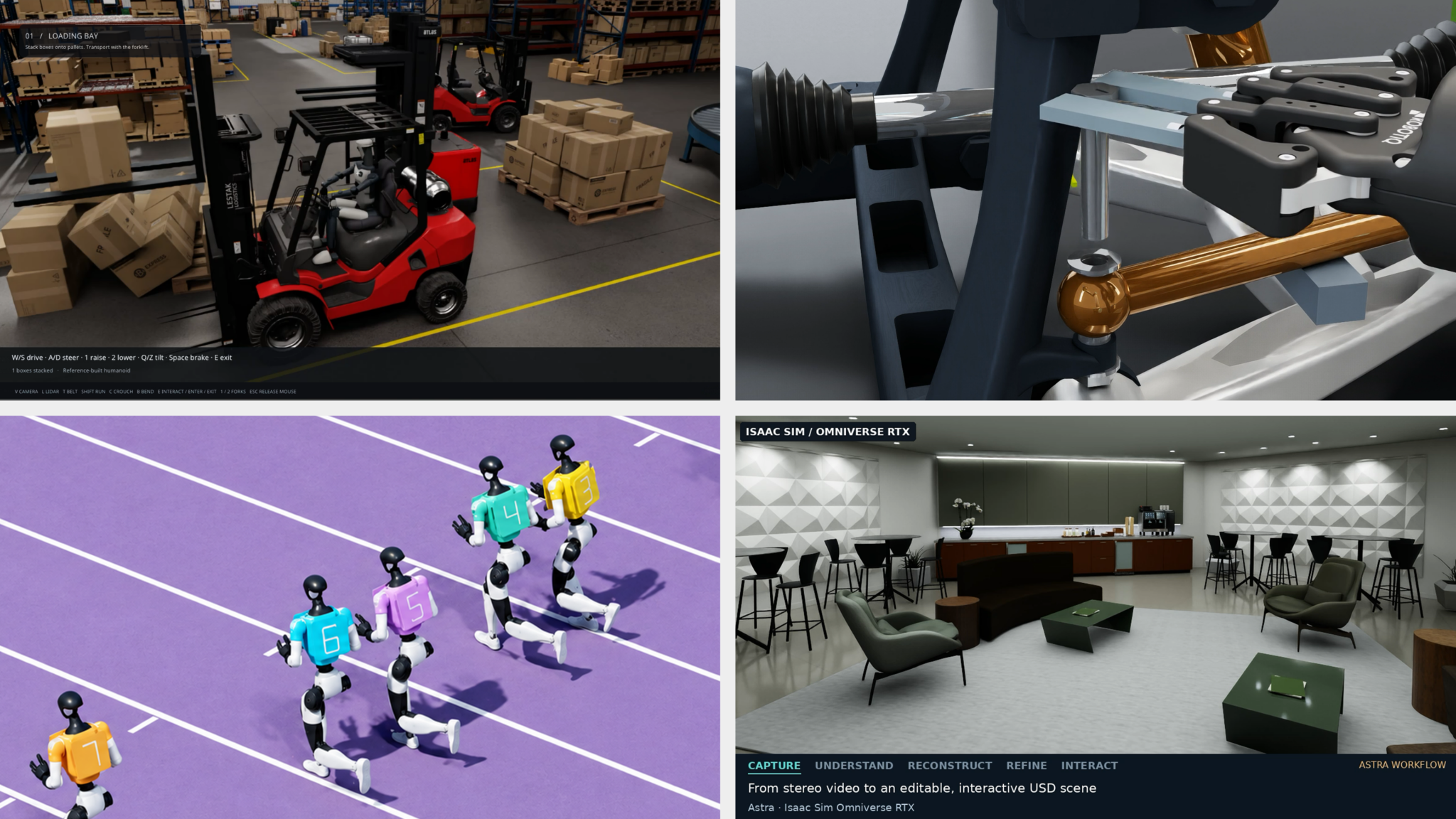
Developers are wiring frontier models into NVIDIA's Omniverse libraries to automate asset assembly, physics setup and scene validation for simulation apps.
NVIDIA is positioning frontier AI models as a way to absorb the grunt work that sits between a simulation idea and a running application. In a new post on its developer blog, the company described how builders are pairing those models with Omniverse libraries to assemble assets, hook up physics and rendering, and verify that a scene behaves the way it was designed to. The pitch is straightforward: simulation projects stall not on the concept but on the plumbing, and agents can take a meaningful share of that plumbing off a developer's plate.
The workflow NVIDIA sketches splits labor between a human director and machine executors. A developer describes the scenario they want — a factory floor, a robot cell, a vehicle test — and the agent handles the mechanical steps of pulling in geometry, applying materials, wiring physics parameters and rendering passes, then running checks against the intended behavior. That division matters because Omniverse's value proposition has always been fidelity: physically accurate, real-time scenes that can be trusted for design review. An agent that misconfigures a constraint or a mass value does not just look wrong, it produces a simulation that quietly lies.
The applications NVIDIA names are the familiar industrial ones: exploring scenarios before committing to hardware, investigating why a design or process failed, and iterating on improvements. Those are tasks where the cost of building the simulation environment has historically outweighed the insight it returns, particularly for one-off failure investigations. If agents compress that setup time, the economics shift toward running more scenarios and fewer intuition-based decisions — a change that touches robotics, manufacturing and autonomous-systems teams first.
The technical bet rests on frontier models being good enough at tool use to operate inside a structured 3D stack. Omniverse gives them a defined set of libraries and APIs to call, which sidesteps some of the reliability problems that plague open-ended agent tasks. It also keeps NVIDIA's simulation platform at the center of the loop: the models can come from anywhere, but the assets, physics and rendering stay in Omniverse. That is a familiar playbook for the company, which has spent several cycles arguing that simulation is the training ground for physical AI.
For developers, the immediate question is how much of the pipeline an agent can actually own before a human has to re-verify everything. Simulation bugs are expensive precisely because they are hard to see, and an automated scene builder that skips validation is worse than no automation at all. NVIDIA's framing puts checking behavior alongside building it, which suggests the company knows the trust problem is the real bottleneck.
What to watch is whether these agent-driven workflows hold up outside demo scenes. Industrial simulation buyers will want evidence that an agent-built environment matches a hand-built one on measurable outcomes, not just on time saved. If that evidence arrives, the constraint on simulation shifts from engineering hours to compute — and that is a trade NVIDIA is well placed to sell.