New Guide Targets the Real Bottleneck in Claude Code: Telling the Agent What You Actually Want
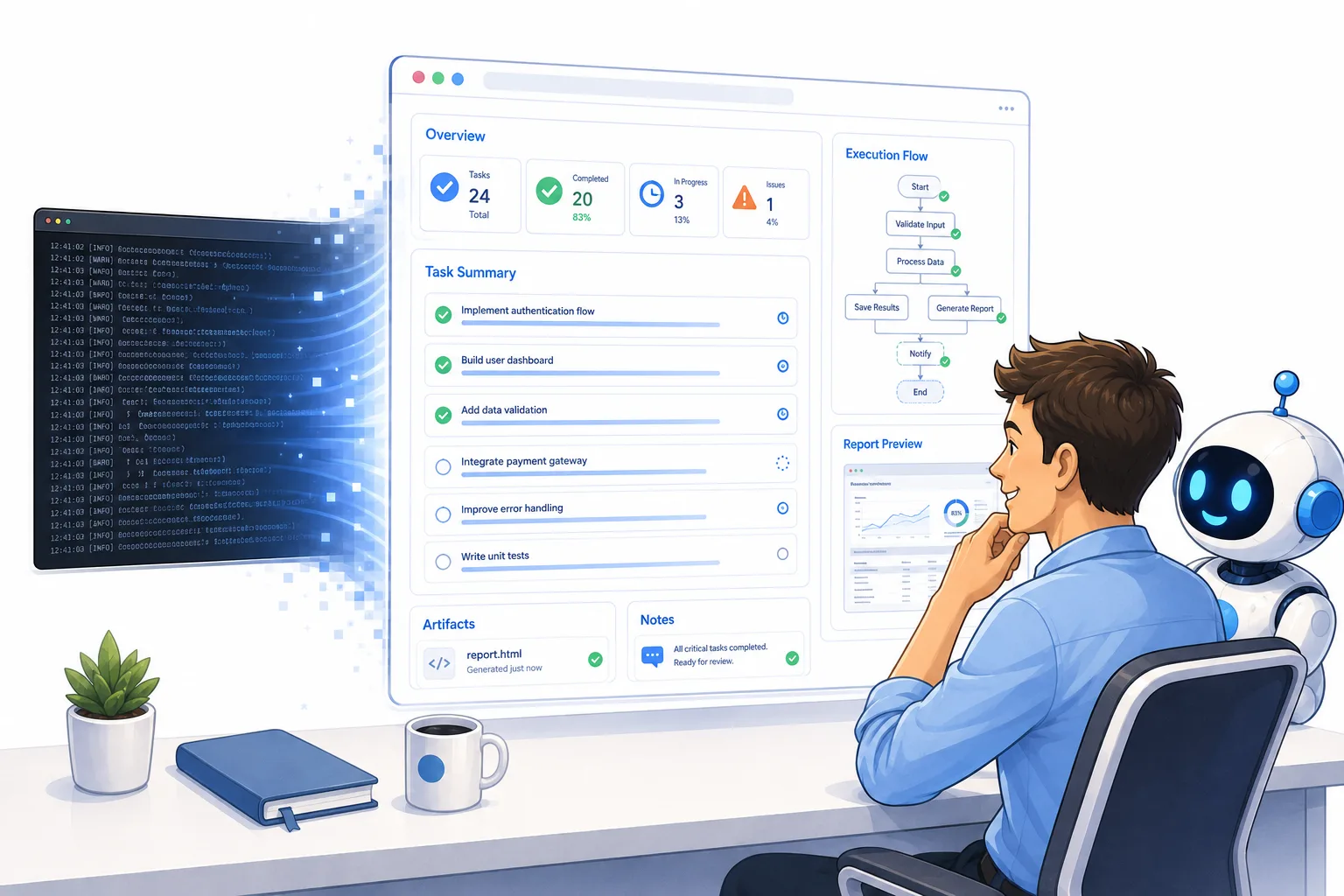
A Towards Data Science post argues that sharper prompts, not faster models, are what multiply a coding agent's output.
A new article published on Towards Data Science takes aim at a problem most developers running Anthropic's Claude Code hit within their first week: the agent builds exactly what was asked for, which is often not what was meant. The piece, framed around a claimed fivefold gain in communication effectiveness, treats prompt clarity as the lever that determines whether a coding session produces working code or a slow-motion misunderstanding. Its core claim is straightforward — the ceiling on agent output is set as much by how instructions are written as by the model doing the work.
Claude Code, Anthropic's terminal-based coding agent, has spread quickly through engineering teams since its release, largely because it can read a repository, edit multiple files, and run commands on its own. That autonomy is also the source of friction. When a request is vague, the agent does not stop and ask; it picks an interpretation and commits to it, which can mean a refactor in the wrong direction or a test suite that passes for the wrong reasons. Developers then spend their time correcting architecture they never wanted instead of writing features.
The guidance fits a broader shift in how the industry talks about working with coding agents. Over the past year, vendors and practitioners have increasingly described prompt and context design as a distinct engineering skill, complete with its own patterns, rather than an informal habit. Anthropic itself has published documentation and internal guidance on structuring requests for Claude, and competing tools from OpenAI, Google, and a cluster of startups face the same constraint. The interface changes; the underlying difficulty of specifying intent does not.
For teams already paying per seat or per token, the stakes are financial as well as technical. An agent that misreads a task burns compute on discarded work, and a developer who has to re-explain a requirement three times has lost the time the tool was supposed to save. That arithmetic is why advice on scoping tasks, stating constraints up front, and pointing the agent at the relevant files tends to circulate widely among engineering groups — it maps directly onto cost and cycle time.
What the Towards Data Science piece does not settle is how much of this burden should fall on the developer at all. Better tooling could infer intent from repository context, existing conventions, or a short clarifying exchange before the agent starts editing. Until that arrives, the practical takeaway for anyone running Claude Code is unglamorous: say what you want, say what you do not want, and check the plan before the diffs land.