Multi-Agent AI System Automates Interrupted Time Series Analysis for Causal Research
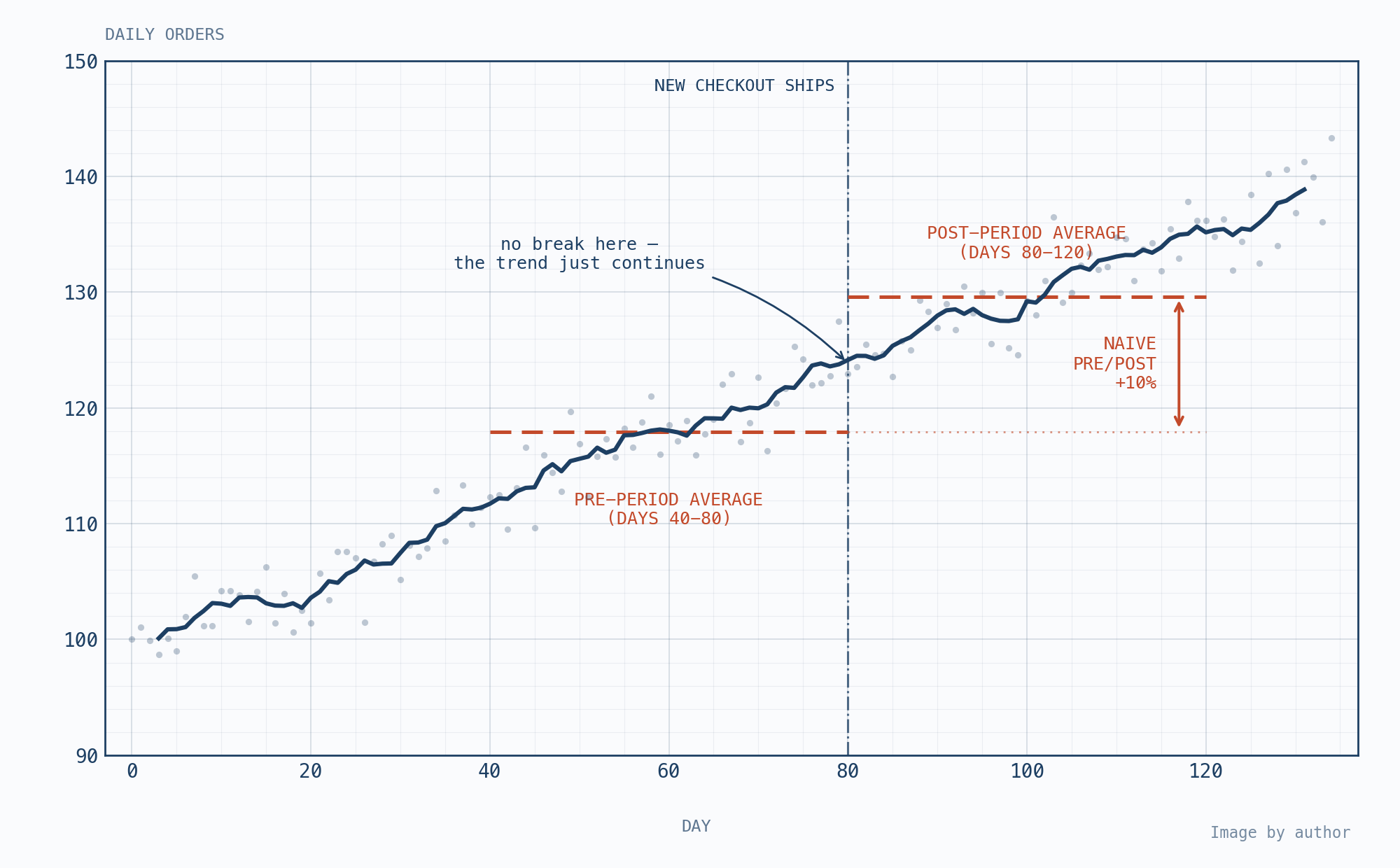
A new practitioner-built multi-agent framework turns interrupted time series analysis, a standard method for measuring policy and intervention effects, into an automated product workflow.
A new write-up published on Towards Data Science details how a multi-agent AI system was built to handle interrupted time series analysis (ITSA), the statistical method researchers use to measure whether an intervention changed an outcome over time. The piece, framed as a product build rather than a pure research paper, walks through what it takes to convert counterfactual analysis into a working AI product. It comes as agent-based tooling moves from demos into applied analytics work, including causal inference.
ITSA is a fixture in policy evaluation and public health research: analysts compare observed outcomes after an intervention against a projected counterfactual trend built from pre-intervention data. Doing that well requires model selection, seasonality handling, autocorrelation checks and sensitivity analysis, steps that are easy to get wrong and hard to scale across many datasets. The multi-agent approach splits those responsibilities, assigning separate agents to tasks that would otherwise sit with one analyst or one monolithic script.
The build described in the post focuses on the engineering required to make that division work in production. Counterfactual analysis is unforgiving: small specification changes can swing effect estimates, so an automated system has to log assumptions, validate inputs and expose uncertainty rather than return a single number. That is the gap between a notebook prototype and a tool a research team can actually run on recurring evaluations.
The timing is notable. Agent frameworks have spent the past two years mostly proving they can browse, code and chain tool calls; applying them to econometric methods like ITSA pushes them toward domains where correctness is measurable and errors carry real cost. If the pattern holds, the same architecture could extend to difference-in-differences, synthetic control and regression discontinuity, all staples of causal policy analysis.
The post appeared under the Towards Data Science banner, a Medium publication that has become a common outlet for practitioner accounts of AI system design. Its framing as a first-person build log suggests the value here is as much about orchestration and evaluation as about the statistics. That is a useful signal for teams weighing whether to buy or build internal causal-analysis tooling.
What remains open is validation. The write-up does not, on its face, settle how the multi-agent system's ITSA estimates compare against established packages or expert analysts on benchmark datasets, or how it handles the messy real-world cases, staggered interventions and missing data, where the method gets difficult. Until that comparison exists, the project reads as a promising engineering template rather than a validated replacement for careful statistical work.