llama.cpp Gets a Faster Prompt Lookup Drafting Path, Drawing Developer Attention
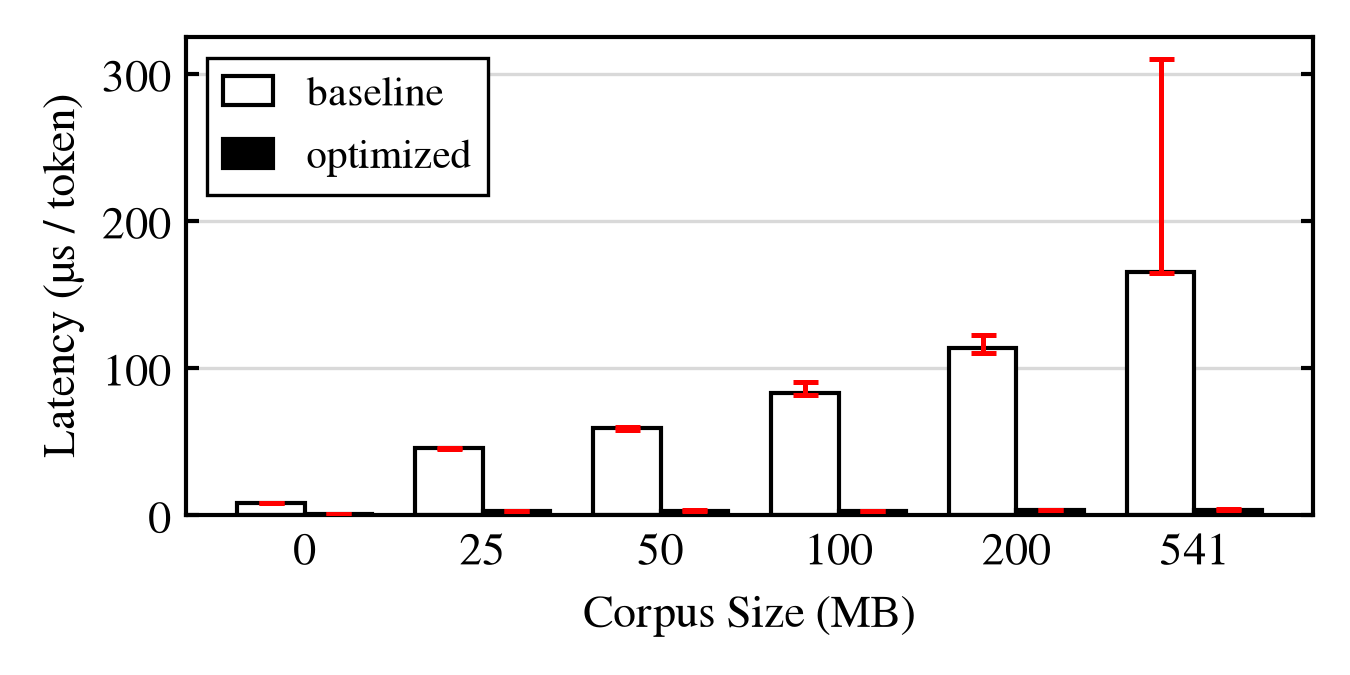
A developer walkthrough of prompt lookup drafting in llama.cpp outlines throughput gains for local LLM inference that require no extra checkpoint or training run.
A developer has published a technical walkthrough of a faster prompt lookup drafting path in llama.cpp, the open-source inference engine that has become the default runtime for quantized large language models on laptops, desktops, and edge hardware. The write-up, hosted on jadidbourbaki.github.io, describes changes to the drafting loop rather than to model weights, meaning existing GGUF files work without modification. The approach falls under the broader umbrella of speculative decoding, a family of techniques that trade extra computation for fewer sequential generation steps.
Prompt lookup drafting works by scanning the input prompt and the tokens already generated for repeated n-gram sequences. When the engine finds a match, it proposes several candidate tokens and verifies them together in a single forward pass, replacing a chain of one-token-at-a-time steps. The method's appeal is that it needs no separate draft model, unlike the speculative decoding setups that pair a small model with a larger one. That removes a training step and a second set of weights from the deployment, which matters on machines with limited memory.
The gains are workload-dependent. Tasks where the output echoes the input, such as summarization, retrieval-augmented question answering, and code editing, tend to hit matches often enough to deliver real speedups on unchanged hardware. Open-ended creative writing, where the model rarely repeats a phrase, sees little benefit. The author frames the contribution as reducing overhead inside the drafting loop, a narrower claim than a wholesale rewrite of the generation pipeline.
llama.cpp's position as a common runtime for local inference gives even small optimizations an outsized reach. Chat interfaces, embedded assistants, and other downstream projects that link against its libraries inherit whatever lands in mainline code. Many of those users run on CPUs or modest GPUs, where each avoided sequential step translates directly into wall-clock time. That is why optimization work at the runtime layer draws attention even when it does not come with a new model release.
The claims have not yet been widely tested. The project moves quickly, and community patches frequently get reworked before maintainers merge them, so the decisive question is whether this optimization is adopted upstream and whether independent benchmarks reproduce the speedups across model families and quantization levels. Developers running local inference should watch the repository's pull requests and release notes in the coming weeks. A reproducible benchmark table from a third party would settle whether the technique holds up outside the author's setup.
The broader pattern is that inference speed is increasingly won in small increments at the runtime layer rather than through new model releases alone. Prompt lookup drafting costs little to enable where repetition is common, and it stays compatible with the quantized files users already have on disk. What remains open is how much of this particular change survives review and lands in a tagged release.