GPT-6 Astra Cracks Century-Old German WWI Radio Cipher
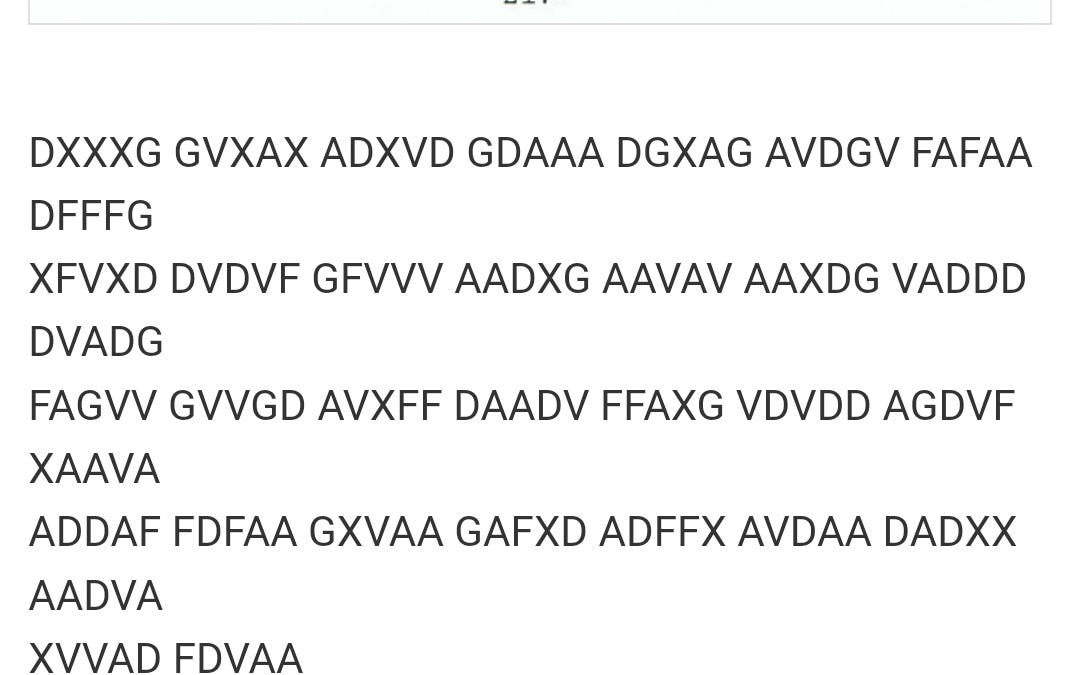
A write-up claims GPT-6 Astra recovered a German field radio cipher that resisted codebreakers since 1914-1918, but no ciphertext, plaintext or prompts have been published for independent checking.
A write-up published at prinzai.com claims OpenAI's GPT-6 Astra has decrypted a German military radio cipher that codebreakers failed to crack during the First World War. If the result holds, it would be the first time a frontier language model has been credited with breaking a historical military code outright rather than helping a human cryptanalyst grind through the work. The account has not been independently verified, and the underlying materials needed to check it have not been released.
The messages in question are not Enigma traffic from the 1930s and 1940s. They belong to the family of hand-produced German field ciphers used between 1914 and 1918, systems that rotated on a schedule and relied on shared keys handed to operators in the field. Allied analysts attacked that traffic for years, usually recovering fragments rather than whole messages. Low message volume and uneven operator discipline are what make these ciphers so hard to reconstruct a century later, once the keying material is gone.
Method is where the claim gets interesting. Large language models complete patterns; they do not run exhaustive key searches, and classical attacks on short historical texts lean on brute-force key trials scored against language statistics. So the open question is what Astra actually did: whether it exploited statistical regularities in the ciphertext alone, inferred German plaintext from thin context, or worked alongside a person who already held partial plaintext. Those details would sit in the original write-up, not in the summary of it.
Skepticism is warranted here, and not because of any flaw specific to this case. Announcements of solved ciphers have a long record of collapsing under review, from the Beale papers to successive Voynich Manuscript proposals. A result that survives replication by outside cryptanalysts would matter; one that does not is a demonstration of fluent, plausible-sounding text, which is a different artifact entirely. AI-assisted historical claims inherit that burden of proof.
The practical stakes for the AI industry have less to do with a 1910s radio message than with how frontier models handle sparse, ambiguous evidence. Cryptanalysis is a useful stress test precisely because the answer is checkable: recovered German either reads as coherent military traffic or it does not. If Astra's output holds up, expect researchers to point similar models at other unsolved historical ciphers and at declassified archives where plaintext exists but was never matched to its ciphertext.
The next step is verification by people with no ties to OpenAI or the publisher. Independent cryptanalysts will want the ciphertext, the recovered plaintext, the prompts, and the exact model version, and none of that is guaranteed by the write-up as described. Until those materials circulate and survive review, the accurate description is a striking claim with a checkable answer, not a settled result.