Google Maps Scraper MCP Brings Business Listing Data to AI Agents
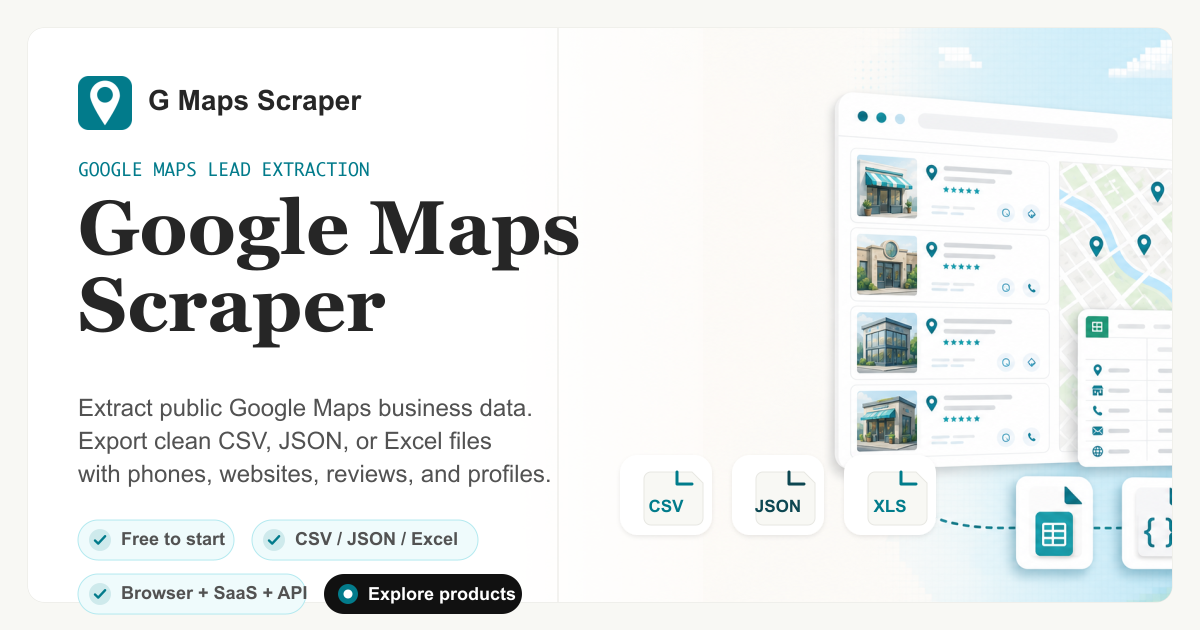
A developer-built MCP server turns Google Maps business search into a callable tool, returning structured listing fields that language models can consume without page-by-page scraping.
A developer has published a Model Context Protocol server that lets AI agents query Google Maps for business listings and receive the results as structured data. The project, posted to Hacker News' Show HN feed, wraps Maps search behind a single MCP connection rather than requiring an agent to render and parse pages itself. It is a narrow tool with a practical aim: make local business data callable the same way agents already call databases or calendars.
The mechanics matter more than the novelty. Maps listings carry names, addresses, opening hours, ratings and category tags, but they arrive inside rendered pages that language models handle poorly. The server shifts that extraction out of the prompt and into a repeatable interface, so an agent invokes a search function and gets back fields it can reason over directly. That removes a class of brittle prompt-level work that agent builders have complained about since tool use became standard.
MCP, the open standard Anthropic introduced, has spent the past year becoming the default plug-in format for agent stacks. Servers now exist for code repositories, payment systems, calendars and databases, each converting a service into typed functions an agent can call. Business directory data is a logical addition because sales prospecting, local market research and competitor tracking all depend on it. One connection replaces another API key, another schema and another billing relationship.
The release lands in a market that is already crowded. Google's own Places API, Yelp Fusion and a long tail of scraping vendors sell comparable listing feeds, usually with uptime guarantees and some legal cover. A self-hosted MCP server competes on cost and flexibility instead, and it carries no such assurances. Google's terms of service on automated collection at scale go unaddressed on the project page, which leaves the legal footing unclear.
Early reaction was thin. The Hacker News submission drew a handful of points and no comments, so nobody has publicly tested rate limits, data freshness or how the server copes with Google's anti-bot defenses. Those are the details that usually determine whether a scraper-backed tool survives real production traffic. Without published maintenance commitments from the author, longevity is an open question.
What to watch is whether the same pattern spreads to other walled-garden data sources and how the platforms respond. If agent developers converge on MCP as the standard connector format, the interesting question stops being whether a given integration exists and becomes whether the underlying data source will tolerate it. Google's next move on automated access, and any licensing offer it makes, will shape how this category develops.