Fired OpenAI Safety Researchers Push Back as Departure Fight Goes Public
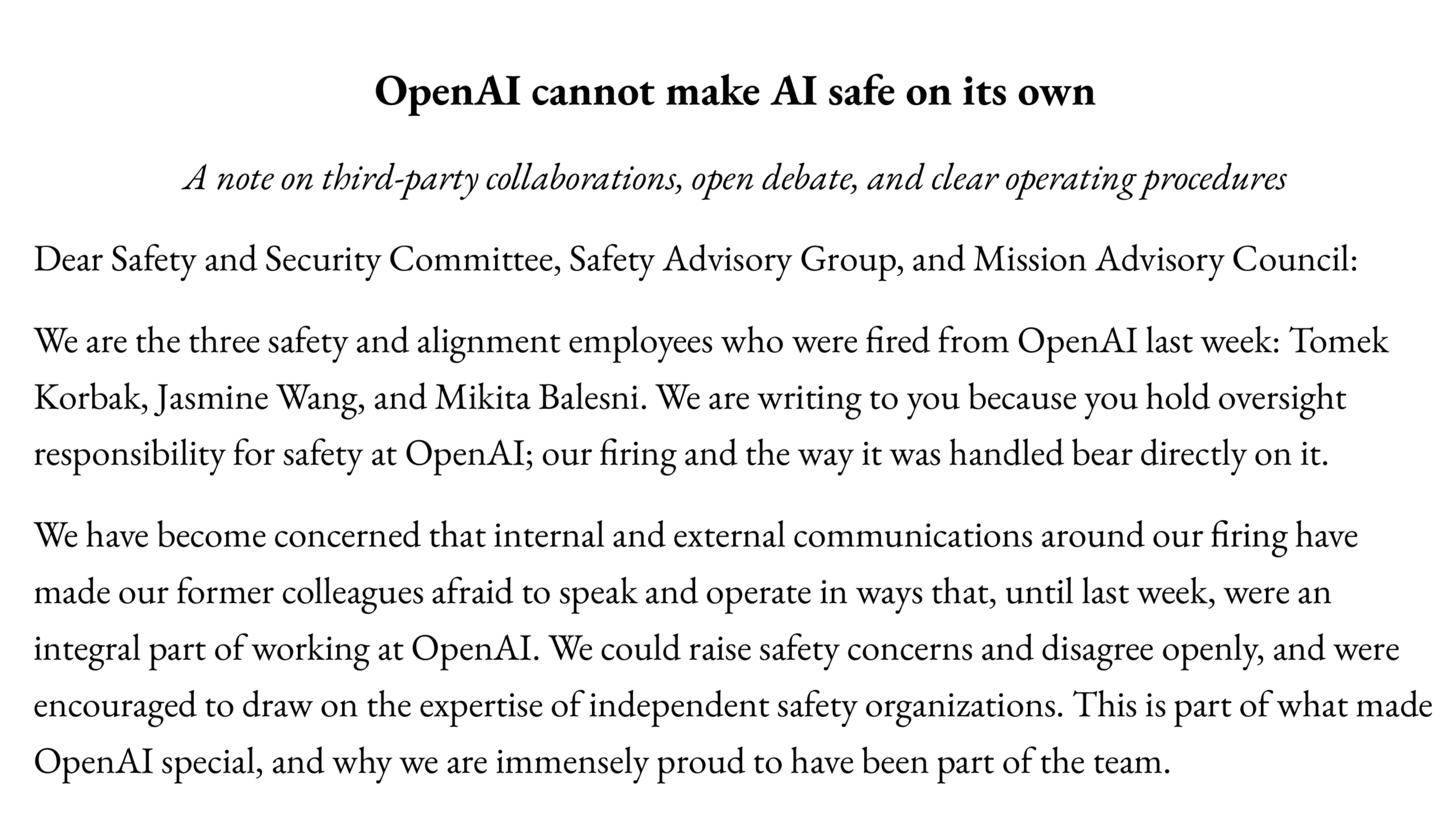
Two former OpenAI safety staffers are contesting the terms of their exit, turning a quiet personnel split into a public dispute over how the lab handles internal dissent.
Two former OpenAI safety researchers have publicly contested their dismissals, pushing back on the company's account of why they left and turning an internal staffing matter into a visible fight over how the lab treats employees who raise safety concerns. The dispute centers on the circumstances of their departures, which the researchers say were mischaracterized, according to reporting from The Rundown AI.
OpenAI has not detailed a specific incident behind the separations, and neither side has released the full internal record. What is clear is that the exits landed in a stretch when the company is shipping new models at a rapid clip and facing questions from regulators and researchers about whether safety work keeps pace with deployment. Safety staff departures at frontier labs are common, but ones that end in a public back-and-forth are not.
The friction fits a pattern that has dogged OpenAI since its November 2023 board crisis, when CEO Sam Altman was briefly ousted and then reinstated within days. That episode exposed a split between the commercial side of the business and the researchers focused on long-term risk, and it prompted the resignation of several safety-oriented staff. The company has since rebuilt its safety organization, added a preparedness framework for frontier models, and stood up an internal safety committee, but the underlying tension over who gets to slow a launch has not gone away.
For people building on OpenAI's APIs, the practical risk is less about any single resignation than about continuity. Safety policy decisions shape what models are allowed to do, which capabilities get gated, and how quickly new versions reach production. If internal disagreements keep spilling into public view, enterprise buyers weighing multi-year commitments may start asking harder questions about governance and who owns the final call on a release.
The researchers' pushback also lands as rivals compete for safety talent. Anthropic has built its public identity around safety research, and Google DeepMind and Meta run their own alignment teams, all of which gives disaffected staff somewhere to go. A public exit dispute can function as a recruiting signal in both directions: it may draw scrutiny to OpenAI's culture, and it may also make the company more careful about how it handles the next internal objection.
What to watch is whether the former researchers escalate beyond statements, whether OpenAI responds with detail or stays quiet, and whether any of this changes the pace or conditions attached to upcoming model releases. The open question is whether a lab that has to move fast on products can still give safety staff a real veto, or whether the answer keeps getting settled after the fact, in public.
Separately, Anthropic's Claude was highlighted for its ability to clean up a messy Excel report, a small illustration of how the assistant is being pitched for everyday office work rather than only coding and research tasks.