European Cities Turn to NVIDIA-Powered AI Agents and Digital Twins for Urban Operations
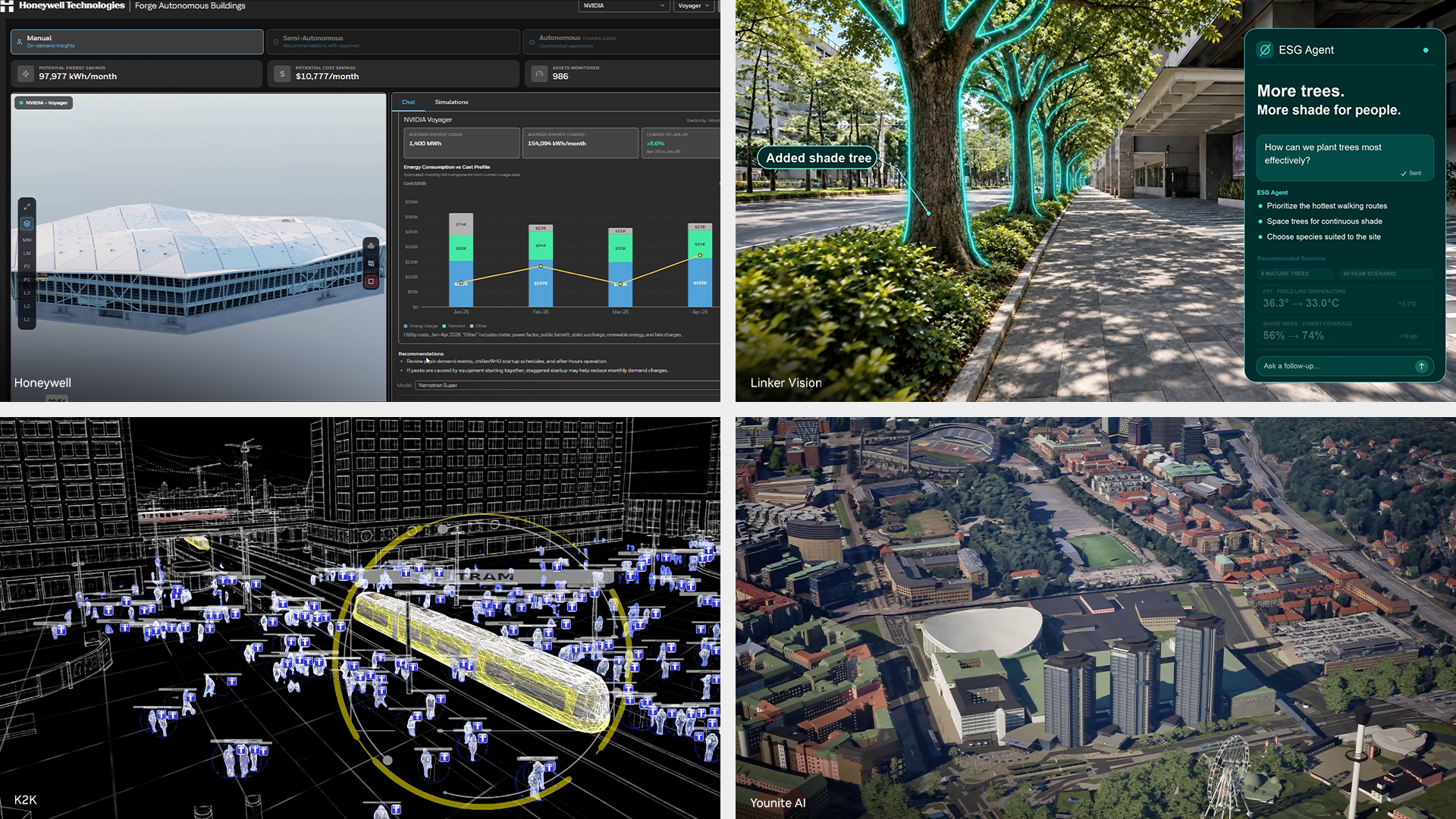
Municipalities across EMEA are pairing NVIDIA accelerated computing with local integration partners to run physical AI agents and digital twins that inform day-to-day city decisions.
Cities in Europe, the Middle East and Africa are increasingly putting AI agents to work on the unglamorous decisions that keep a municipality running — when to repair a road, how to shift energy load, where to send crews. The work relies on NVIDIA accelerated computing, according to the company, with local software firms, infrastructure operators and systems integrators building the tools rather than importing a single off-the-shelf platform.
The technical shape of these deployments is consistent: a digital twin of the city or a slice of it, fed by sensor and operational data, paired with AI agents that model options and surface recommendations to human staff. NVIDIA's role is the compute layer underneath — GPUs and the software stack that train and run the models — while partners handle the domain work of wiring a city's data into something usable. That division matters because urban data is messy, spread across utilities, transport authorities and public works departments that rarely share a schema.
The EMEA framing is deliberate. European cities operate under tighter rules on public data and procurement than their US counterparts, and many have long-standing smart-city programs that stalled when pilots failed to scale past a single district. Rebuilding those efforts around physical AI agents — software that acts on the built environment rather than just visualizing it — is the bet that this generation of tools clears the bar that dashboards did not.
The vendor incentive is clear. NVIDIA has spent the past two years pushing beyond data-center training into what it calls physical AI: robotics, simulation and industrial systems where GPUs sit inside the operational loop. Cities are an attractive proving ground because the budgets are public, the problems are repetitive, and a successful deployment is visible to residents. Whether that translates into repeatable contracts across dozens of municipalities, or stays a set of bespoke integrations, is the open question.
For the AI industry, the notable part is the go-to-market. Rather than selling a city an AI product, NVIDIA is positioning itself as the compute substrate beneath a layer of regional partners who own the customer relationship. That mirrors how the company built its data-center business through server vendors, and it puts the integration firms — not the model providers — in the position of deciding what actually gets deployed.
What to watch is whether any of these deployments publish measurable outcomes: response times on repairs, energy shifted, cost per decision. Smart-city history is littered with impressive demos and thin evidence. If EMEA cities start reporting numbers that hold up, the model becomes a template for municipal AI elsewhere — and the partners doing the integration become the companies worth tracking.