Emerald AI Ties Data Center Power Draw to Grid Signals in Live Silicon Valley Test
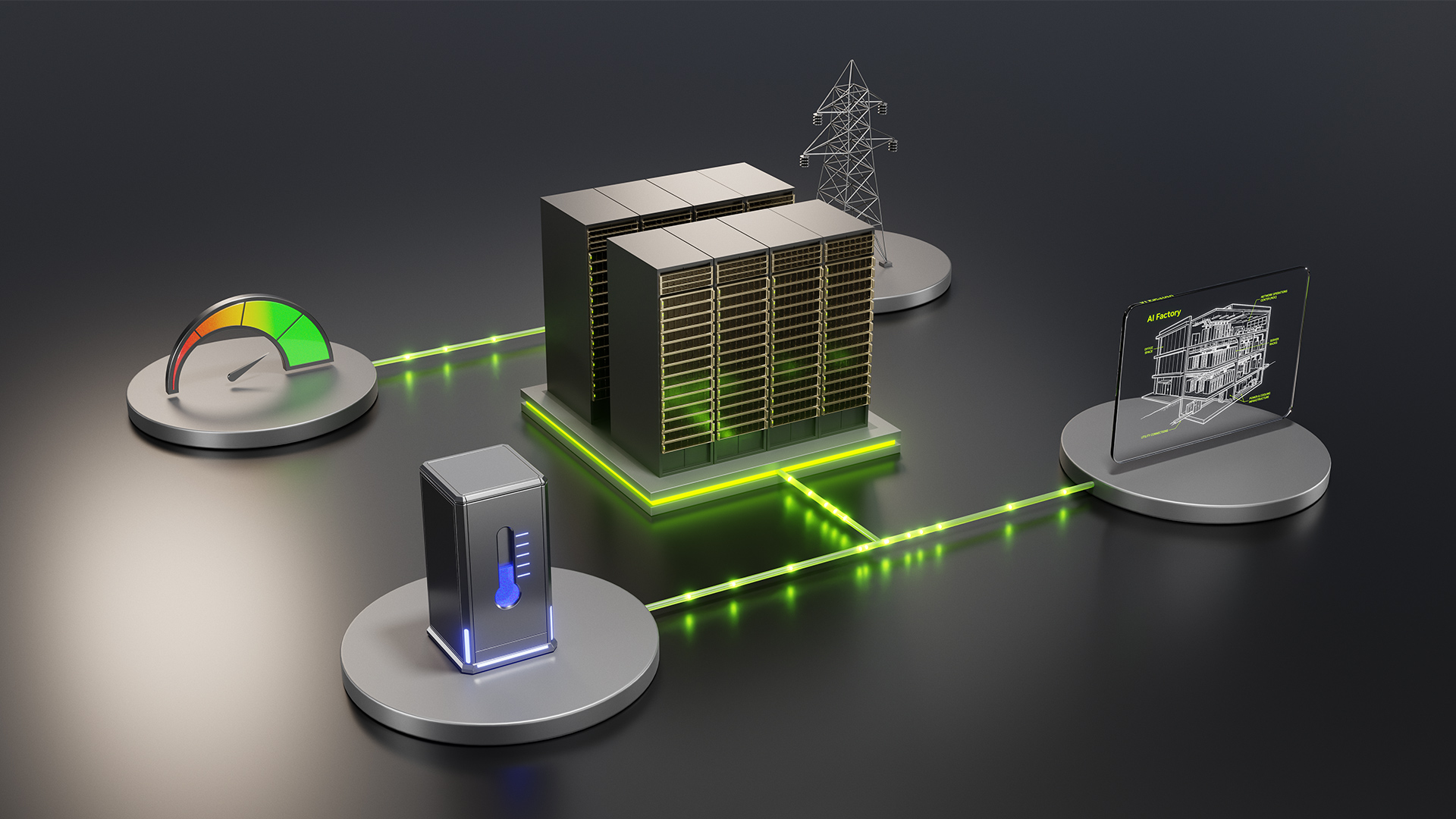
Emerald AI ran a live demand-response test on an AI factory in Silicon Valley, showing that data centers can throttle power use when the grid is stressed.
Emerald AI pulled off a live test of something grid operators have wanted for years: an AI data center that dials its own power use up or down on command. On an August evening in Silicon Valley, utility Silicon Valley Power sent a signal to a working AI factory asking it to trim consumption as air conditioning loads spiked with the temperature. The facility complied, cutting its draw while the grid was under strain.
Varun Sivaram, who leads Emerald AI from San Francisco, watched the response unfold over Zoom alongside roughly forty colleagues and engineers gathered in the company's conference room. The group tracked the facility's power curve in real time as the utility's request moved through the system. It was a small window, but a consequential one: the experiment put a number on how quickly a large computing site can respond to grid conditions.
The stakes are straightforward. AI training and inference clusters now draw power at a scale that rivals mid-sized industrial users, and utilities in Northern Virginia, Texas and Arizona have warned that interconnection queues and peak demand are becoming binding constraints on new builds. A data center that can shed load on request is worth more to a grid than one that only consumes. That flexibility, in turn, can shorten the time it takes to get a new campus energized.
Silicon Valley Power, the municipal utility serving Santa Clara, has been an early venue for this kind of coordination because so much of its load is already data centers. Emerald AI's pitch is that the adjustment can happen without disrupting the workloads running inside — the same tokens keep getting produced, just on a power budget that moves with the grid. The company has not disclosed the size of the facility involved or the megawatts shifted during the test.
What remains unresolved is whether this works at the scale and frequency that grid operators actually need. A single evening test with a cooperative utility is a proof of concept, not a procurement standard, and questions linger about how such arrangements get priced, metered and verified when dozens of sites are bidding into the same demand-response market. Emerald AI's next step will be showing the same response across multiple facilities and under tighter time windows.