DoorDash Built a Multi-Agent LLM System to Retire 60,000 Stale Feature Flags
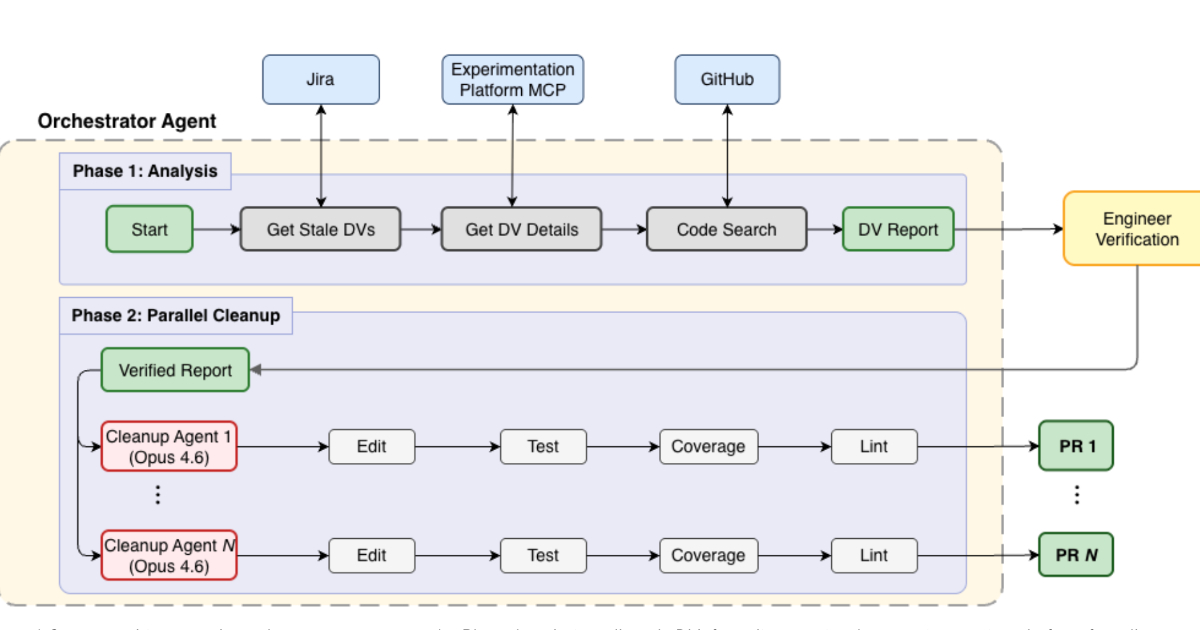
DoorDash's agent pipeline cleared 45 of 50 stale feature flags into usable pull requests at about 13.8 minutes and $4.79 each.
DoorDash has built a multi-agent system powered by large language models to automate a chore most engineering teams put off indefinitely: deleting feature flags nobody uses anymore. The company is applying the workflow across 60,000-plus flags spread over 623 repositories, according to an account published by InfoQ and credited to Leela Kumili. DoorDash's engineers say the approach turns a multiday cleanup task into something closer to a review queue.
The problem is familiar to anyone who has shipped behind flags. A flag gets created for an experiment, the experiment ends, and the code path stays in the repository long after the decision is settled — accumulating dead branches, confusing new hires and slowing builds. At DoorDash's scale, manual removal meant an engineer had to confirm the flag was truly unused, edit the code, run tests and shepherd a pull request, often for a change with no visible product payoff. That math rarely worked out, so the flags piled up.
The system DoorDash describes chains several components together rather than relying on a single model call. It pulls live experimentation data through the Model Context Protocol, so an agent can check whether a flag is still driving a running test before touching it. After that check, an engineer approves the removal, the agent works inside an isolated Git worktree, and parallel agents handle separate flags at the same time. Automated validation runs before anything is proposed for merge, which keeps the human in the loop at the decision point rather than in the cleanup itself.
DoorDash published cost and timing numbers from a 50-flag evaluation: 45 of them yielded pull requests that were usable, an average of 13.8 minutes per flag and $4.79 per cleanup. The five that fell short did not produce shippable changes, a reminder that the pipeline is a filter, not a guarantee. Still, a 90% usable-output rate at under five dollars a flag reframes the economics of technical debt work, where an hour of senior engineer time can cost far more than the entire automated run.
The broader signal is that agent orchestration is moving from demos into maintenance work that companies have long tolerated as unfixable. Feature flag debt is unglamorous, but it is also measurable, repetitive and verifiable — exactly the profile that suits parallel LLM agents with a validation gate. DoorDash's use of MCP for live experiment data also shows how model context is becoming plumbing for internal systems rather than a chatbot accessory.
What remains open is whether the numbers hold outside a curated evaluation. DoorDash has not said how many of the 60,000 flags the system will actually attempt, how often humans reject a removal recommendation, or what happens when a flag's history is ambiguous. The 50-flag trial is a proof of concept; the real test is whether 623 repositories of flag cleanup can run at that cost and quality without an engineer babysitting the queue.