Claude Code Gets a Design System: How Developers Are Enforcing UI Consistency
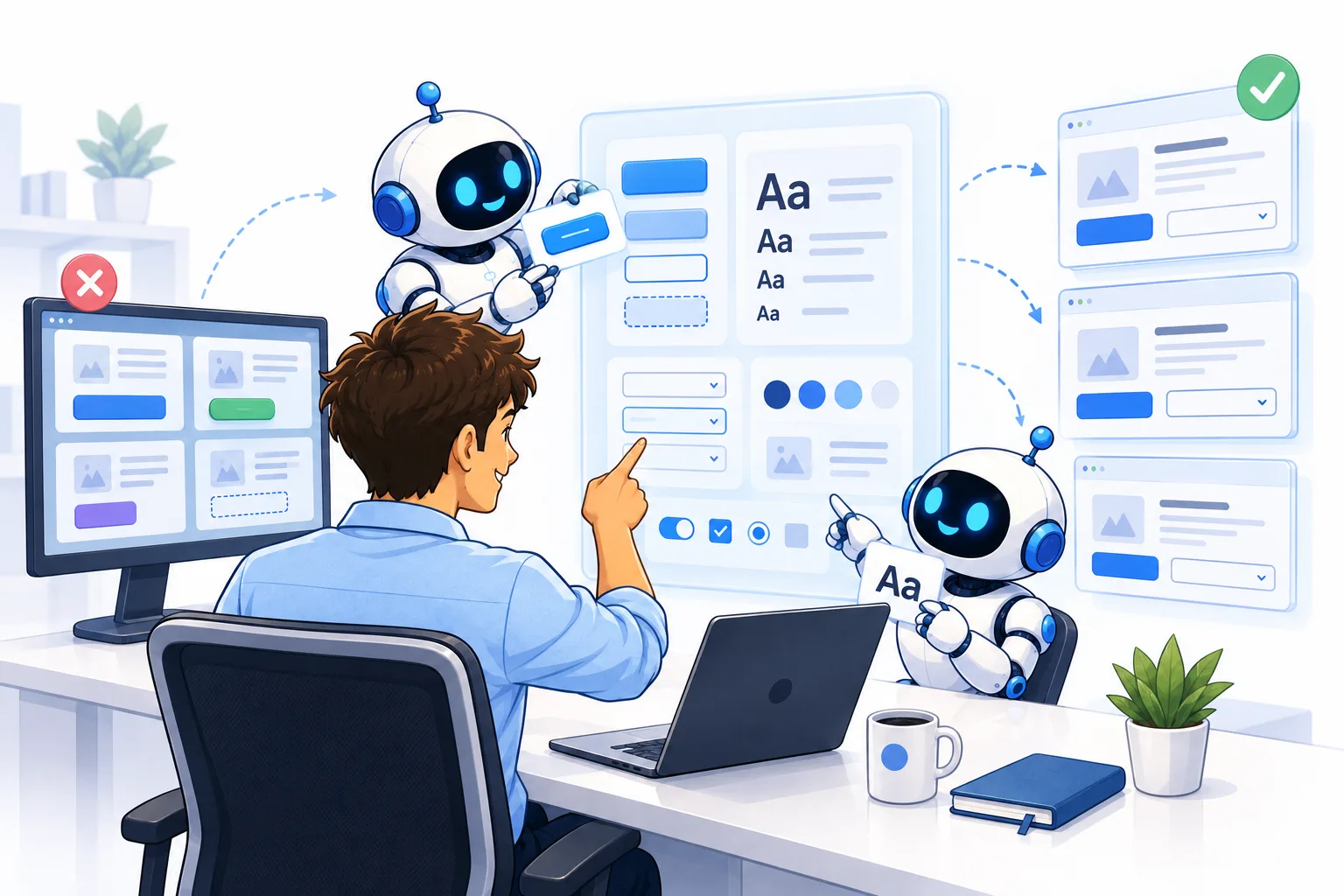
A new workflow using Claude Code design skills aims to stop AI-generated apps from drifting into mismatched fonts, spacing and colors.
Developers building apps with Anthropic's Claude Code now have a repeatable method for keeping interfaces visually consistent, according to a guide published on Towards Data Science. The approach treats design rules as reusable instructions the coding agent follows on every screen, rather than trusting each generated component to look right on its own. It targets a familiar failure mode: an app that works but ships with clashing type scales, uneven padding and a palette that shifts from page to page.
The core idea is to give the agent an explicit design contract before it writes UI code. That means defining tokens for typography, color, spacing and component variants in a file the agent reads, then prompting against those definitions instead of describing a look in prose each time. When the rules live in the repository, every new button, card or form inherits the same values, and reviewers can diff changes against a single source of truth.
Claude Code has become a common tool for scaffolding full applications from natural-language prompts, a workflow that trades speed for predictability. Left unchecked, an agent optimizing for 'make this page' will invent slightly different styles for each request, producing the visual equivalent of technical debt. The design-skills pattern borrows from how engineering teams already handle linting and formatting: encode the standard once, enforce it automatically, and stop arguing about it in pull requests.
The practical payoff is less rework. Teams that adopt token-driven prompts spend fewer cycles restyling AI output by hand and catch inconsistencies before they reach a design review. It also makes handoff easier, since a designer can edit the token file and expect the agent to apply the change everywhere, rather than chasing individual screens. For solo builders shipping prototypes, the same setup is a cheap way to make a demo look intentional.
Anthropic has steadily pushed Claude Code toward agentic coding tasks, competing with tools like Cursor, GitHub Copilot and OpenAI's Codex for the developer workflow. Design consistency is one of the less glamorous problems in that race, but it is a frequent complaint from teams deploying AI-written front ends. Whoever solves it cleanly gains a reason for design-conscious shops to standardize on their agent.
What remains open is how far the pattern scales. Token files work well for a defined component library, but they can lag when a product needs a genuinely new visual language or a marketing page that breaks the grid on purpose. The next test is whether these design skills hold up across large multi-team codebases, or whether they stay a tidy trick for smaller projects.