Anthropic's AI-Powered Biology Lab Reports Its First Discovery
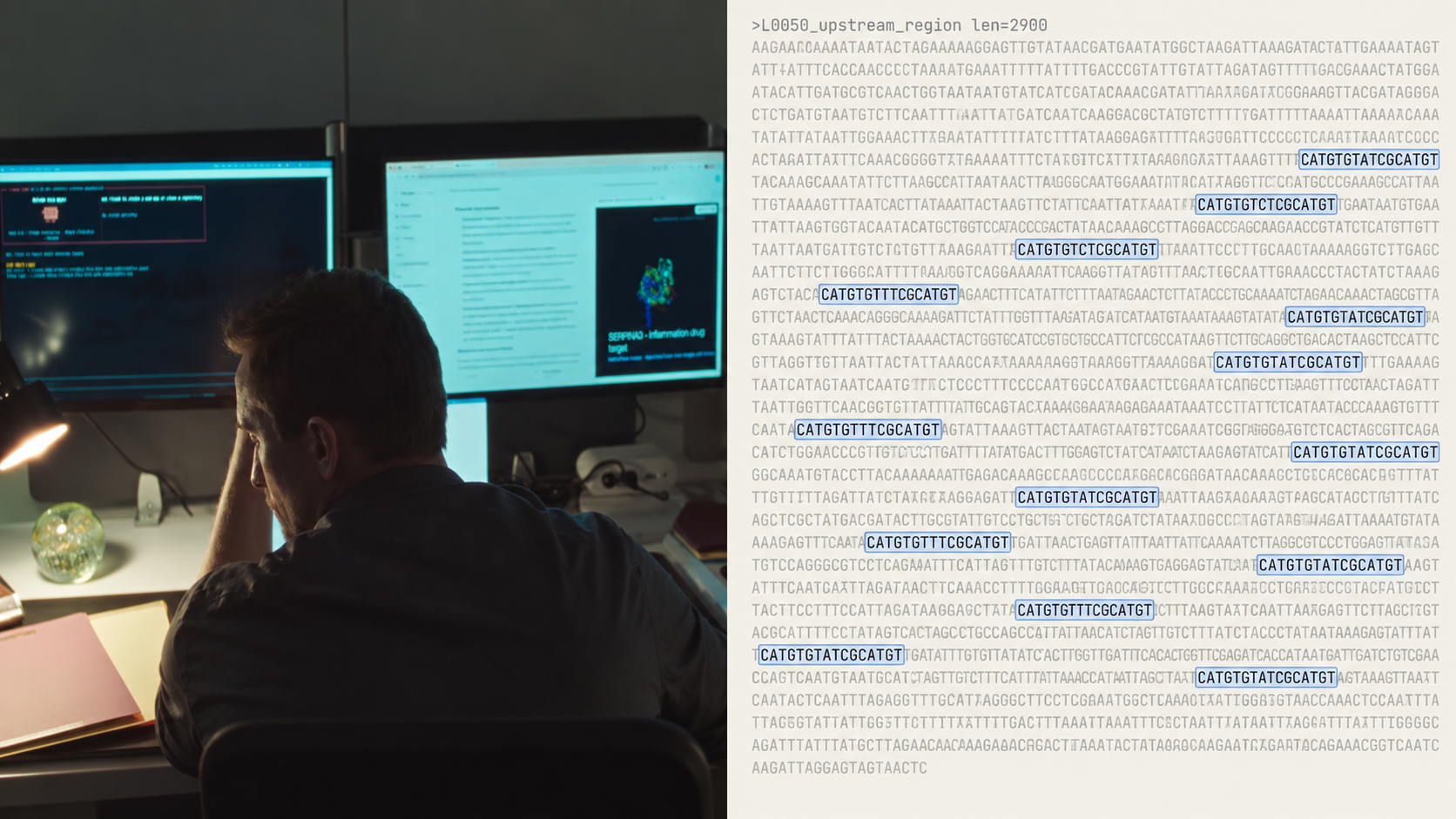
Anthropic says an autonomous lab system it built for biological research has produced its first scientific finding, a step toward AI that runs experiments on its own.
Anthropic has reported the first scientific result to come out of an AI-run biology laboratory, marking an early milestone in efforts to let machines design and carry out experiments without a human at the bench. The finding was surfaced in a roundup from The Rundown AI, which paired the news with a separate item about a browser-based assistant. Anthropic has not yet published the full technical writeup, leaving the scope of the discovery and how much of it was automated still unclear.
The idea behind an AI-run lab is straightforward even if the execution is not: models propose hypotheses, plan assays, and interpret results, while robotic hardware handles the physical pipetting and imaging. That loop compresses the cycle between an idea and a data point, which in biology can otherwise stretch across weeks of bench work. Several groups have pushed in this direction, but most published examples rely on heavy human supervision at each stage.
Anthropic's move fits a broader pattern of AI companies reaching into the sciences. Google DeepMind has spent years on protein structure prediction and materials discovery, and startups have raised money for self-driving labs that screen compounds at scale. What distinguishes a claim like Anthropic's is the emphasis on autonomy: the pitch is not a better prediction tool but a system that decides what to test next. That shift matters because experimental design, not raw computation, is often the bottleneck in drug and materials work.
The announcement also lands as Anthropic competes for attention and talent against OpenAI, Google, and a growing field of well-funded rivals. Demonstrating real scientific output gives the company a concrete result to point to beyond benchmark scores, which have become harder for outsiders to interpret. It also invites scrutiny: a single finding, even a valid one, says little about whether the approach scales or reproduces across labs.
The obvious next questions are what the discovery actually was, whether independent researchers can replicate it, and how much human intervention the process required. Anthropic will need to release data and methods before the claim carries weight with working biologists. Until then, the result stands as a signal of intent rather than a settled advance.