Amazon Deploys AI Systems to Flag Union Activity at UK Warehouses
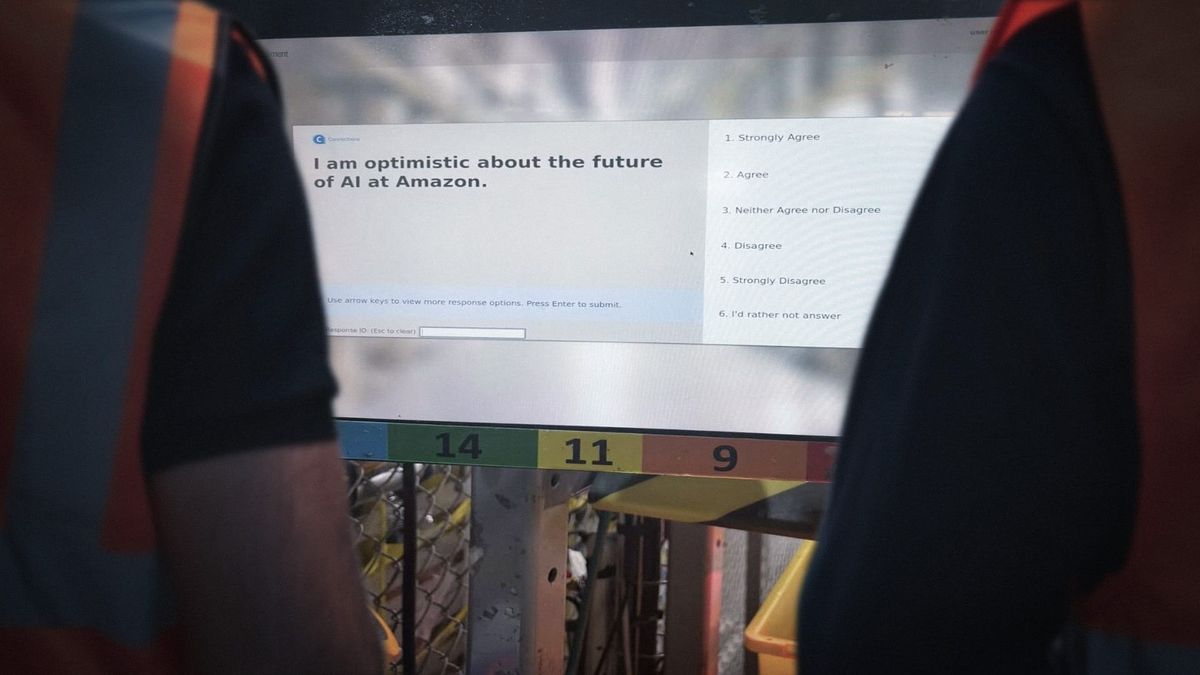
Internal Amazon systems reportedly score UK warehouse workers on union-organizing risk, according to an openDemocracy investigation covering sites in Birmingham, Coventry and Sutton Coldfield.
Amazon has built AI-driven monitoring systems that assess the likelihood of union activity among workers at its UK fulfillment centers, according to an investigation published by openDemocracy. The reporting focuses on sites in Birmingham, Coventry and Sutton Coldfield, where the company is said to track signals tied to organizing. Amazon has not confirmed the specifics of the system, and the company has previously said it does not surveil employees for union membership.
The reporting describes a tool referred to as Atlas, which the investigation links to the scoring of workforce data for signs of collective action. Coventry has been a flashpoint: workers there staged a lengthy strike over pay that drew national attention and became one of the most visible labor disputes in Amazon's UK operations. The timing matters because UK employment law gives workers specific protections around union membership and organizing, and automated flagging of that activity would sit uneasily against those rules.
The mechanics described in the investigation are the part that should interest anyone who builds workplace analytics. Employee data — attendance, productivity metrics, internal communications — is exactly the raw material that classification models consume, and systems that score workers on an outcome like 'union risk' require someone to define labels, choose features, and set thresholds. Those choices are engineering decisions, not neutral measurements, and they are increasingly made by vendors selling workforce-monitoring software to large employers.
Amazon is not alone in pushing monitoring deeper into the warehouse floor. Computer vision, gait analysis and productivity tracking have become standard sales pitches for logistics operators, and the EU's AI Act now classifies some workplace emotion-recognition and worker-scoring uses as high risk, with transparency and human-oversight obligations. UK regulators have signaled similar concerns without yet legislating at the same level. That gap leaves the practical rules largely to employers and the courts.
For Amazon, the disclosure lands during a period of strained labor relations in Europe, where organizing drives have spread across Germany, Spain and the UK. The company has consistently maintained that it offers competitive pay and that employees can choose whether to join a union, and it denies monitoring workers for organizing. Whether the reported system violated UK law is now a question for regulators and, potentially, employment tribunals.
What to watch next is whether the Information Commissioner's Office or the Employment Agency Standards Inspectorate opens a review, and whether any of the named sites become the basis for a legal claim. The broader question is disclosure: employers deploying worker-scoring tools rarely publish what data feeds them or who reviews the output. Until that changes, warehouse staff and the engineers building these systems have little way to know where the line sits.