AI Code Assistants Are Shipping scikit-learn Models With Five Risky Defaults Intact
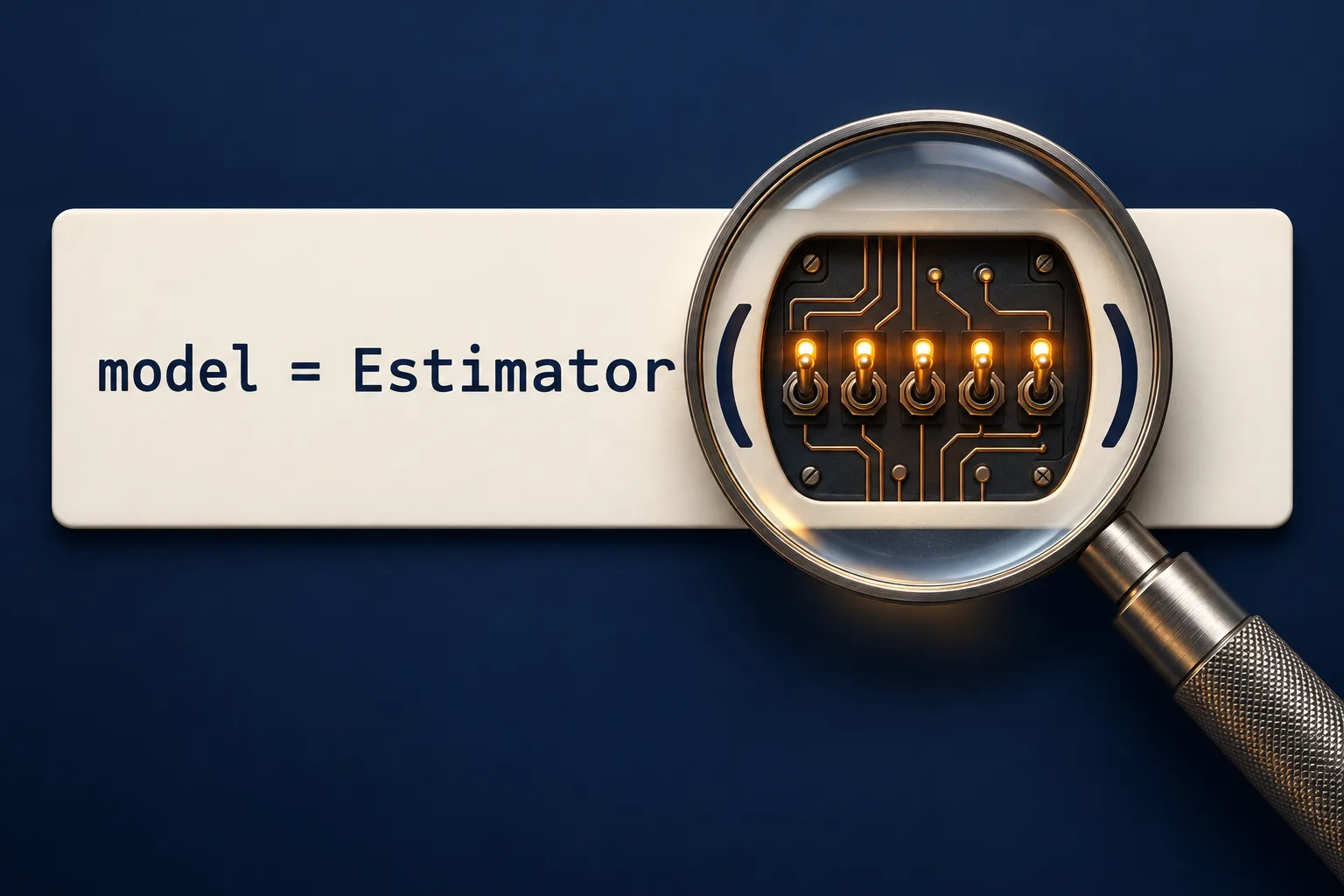
As AI copilots write more production machine learning code, a review of scikit-learn's out-of-the-box settings shows five defaults that can quietly degrade models before anyone checks them.
AI coding assistants now generate a growing share of the machine learning pipelines that reach production, and a new review published by Towards Data Science argues that the library most of them reach for, scikit-learn, ships with five defaults that deserve scrutiny before any model goes live. The concern is not a bug or a vulnerability but something harder to catch: settings that work fine in a tutorial notebook and cause quiet problems at scale. When a language model writes the code, those defaults get inherited without the human review that used to happen along the way.
The pattern is familiar to anyone who has watched a copilot complete a training script. The assistant produces clean, idiomatic scikit-learn, and the code runs on the first try. What it rarely does is explain why a given parameter was left alone. That silence is the problem. Defaults are chosen for general safety, not for the specific dataset, class balance, or deployment constraints of the project at hand, and the gap between the two is where models lose accuracy or produce misleading evaluation numbers.
The review singles out five areas where the out-of-the-box behavior is most likely to mislead. Regularization strength in linear models is set for generic data, not for the feature scales and correlations a real pipeline carries. Class weights stay uniform, which skews results on imbalanced targets. Tree-based ensembles keep unrestricted depth and no early stopping, inviting overfitting that cross-validation may not surface if the split is careless. Preprocessing defaults, including scaling and imputation, can leak information when applied before a train-test split. And default probability thresholds assume a symmetric cost of false positives and false negatives, an assumption few production systems actually satisfy.
None of this is new to statisticians or to engineers who have tuned scikit-learn by hand for years. What has changed is who writes the first draft. A junior analyst who once had to read the documentation to make the code run now receives working code with no such forcing function. The assistant optimizes for plausibility, and plausible code is exactly the kind that passes a quick eyeball test and gets merged.
The practical fix does not require abandoning AI-generated code. It requires treating defaults as decisions rather than background. Teams can add a short checklist to pull requests that touch model training: confirm the regularization setting against feature scale, set class weights or resampling for imbalanced labels, cap tree depth or enable early stopping, move preprocessing inside a pipeline to prevent leakage, and choose a decision threshold from the actual cost of each error type. Each item takes minutes and catches failures that are otherwise invisible until the model is in front of users.
The open question is whether code assistants will start surfacing these choices on their own. Some tools already annotate generated code with brief rationale, but none reliably flag when a default is a bad fit for the data it just saw. Until that changes, the review's point stands: the defaults are not wrong, they are just unchecked. The next model that reaches production will carry whichever ones nobody stopped to question.